Download A Traffic of Dead Bodies: Anatomy and Embodied Social Identity in Nineteenth-Century America - Michael Sappol | PDF
Related searches:
A Traffic of Dead Bodies: Anatomy and Embodied Social Identity in
A Traffic of Dead Bodies: Anatomy and Embodied Social Identity in Nineteenth-Century America
A Traffic of Dead Bodies: Anatomy and Embodied Social - JSTOR
A Traffic of Dead Bodies – Anatomy and Embodied Social Identity in
Anatomy, History: A Traffic of Dead Bodies: Anatomy and Embodied
Review: A Traffic of Dead Bodies: Anatomy and Embodied Social
(PDF) Michael Sappol, A traffic of dead bodies: anatomy and
Book Review: A traffic of dead bodies: anatomy and embodied
McGregor on Sappol, 'A Traffic of Dead Bodies: Anatomy and
Amazon.com: A Traffic of Dead Bodies: Anatomy and Embodied
Dissecting the Pennsylvania Anatomy Act: Laws, bodies, and
Grave robbing in the North and South in antebellum America
Michael Sappol. A Traffic of Dead Bodies: Anatomy and
Read A Traffic of Dead Bodies: Anatomy and Embodied Social
A Traffic of Dead Bodies: Anatomy And Embodied Social
Law and the Dead Body - Annual Reviews
Michael Saffol, A Traffic of Dead Bodies: Anatomy and
Michael Sappol, A Traffic of Dead Bodies: Anatomy and
A Traffic Of Dead Bodies Anatomy And Embodied Social Identity
Regulating the Dead: Rights for the Corpse and the Removal of San
THE LAW AND ETHICS OF USING THE DEAD IN RESEARCH BY
3. Anatomy Is the Charm: Dissection and Medical Identity in
7. The Foul Altar of a Dissecting Table: Anatomy, Sex, and
Respect for the dead and the ethics of anatomy
David and anatomy, Michelangelo and the study of corpses
Dead Bodies In Car Accident Photos Photos and Premium High
(PDF) Procuring, administrating and burying dead bodies in
Anatomy Museum: Death and the Body Displayed, Hallam
Dead Female Body High Resolution Stock Photography and Images
Leonardo da Vinci - Anatomical studies and drawings Britannica
Dead Female Bodies Photos and Premium High Res Pictures
Jun 5, 2018 a traffic of dead bodies enters the sphere of bodysnatching medical students, dissection-room pranks, and anatomical fantasy.
Then the future doctors move on to the anatomy lab where the dead bodies await.
Index words: anatomical museums, dissection, body snatching, medical 1 michael sappol, a traffic in dead bodies: anatomy and embodied social.
Feb 21, 2016 my eyes roam across the lab, and i spy on female cadavers lustrous red nail paint� as fresh and explosive as roses in bloom.
We can understand this process better in the light of sappol's extraordinary evocation of 19th-century anatomy and american culture. Lederer, new england journal of medicine a traffic of dead bodies offers surprising new insights for both medical and cultural historians. It combines an innovative account of anatomy in american medicine with an unprecedented exploration of the dissected body in american culture, from common schools to pulp fiction and bowery wax museums.
Mar 21, 2018 a new crop of doctors-in-training are learning anatomy with the help of virtual reality.
He made groundbreaking discoveries about human anatomy and admittedly performed procedures on dozens of dead bodies. Da vinci clearly outlined the procedure with which he preserved the bodies that he studied. To make embalming fluids, he mixed turpentine, camphor, oil of lavender, vermilion, wine, rosin, sodium nitrate, and potassium nitrate.
The anatomy laws passed after midcentury confirmed this social calculus by explicitly targeting unclaimed bodies. Metropolitan life was one of a number of companies that got its start in part as a counterweight to the anatomists; it sold policies ensuring that workers with few assets would get a decent (ie, permanent) burial.
This thorough and fascinating treatment of the politics of anatomy studies in 19th-century america provides a variety of perspectives on the vexed question of how appropriately to study human anatomy while also maintaining respect for the human body and honoring the various, deeply held community beliefs, and attitudes toward treatment of the dead. Sappol seeks, as he puts it, to complicate the cultural history of medicine in late-eighteenth- and nineteenth-century america.
Michael sappol is fellow at the swedish collegium for advanced study in uppsala. He is the author of a traffic of dead bodies: anatomy and embodied social.
A traffic of dead bodies: anatomy and embodied social identity in 19th-century america. Discusses death practices, role of dissection in medical professionalization and science, changes in the law concerning the disposition of bodies, riots against medical schools, popular anatomical texts, popular anatomical museums.
Oct 26, 2015 in today's society, supplies of subjects for dissection purposes are easy to michael sappol, a traffic of dead bodies: anatomy and embodied.
Michael sappol, a traffic of dead bodies: anatomy and embodied social identity in nineteenth-century america jonathan simon 1 metascience volume 12� pages 117 – 120 ( 2003 ) cite this article.
Sappol’s work focuses on the history of anatomy, death, and the visual culture of medicine and science in film, illustration and exhibition. He is the author of a traffic of dead bodies (2002) and dream anatomy (2006), editor of a cultural history of the human body in the age of empire (2010) and hidden treasure (2012), and emeritus curator.
It is an empirically rich and creatively theorized book that resists easy classification. A traffic of dead bodies offers surprising new insights for both medical and cultural historians. It combines an innovative account of anatomy in american medicine with an unprecedented exploration of the dissected body in american culture, from common schools to pulp fiction and bowery wax museums.
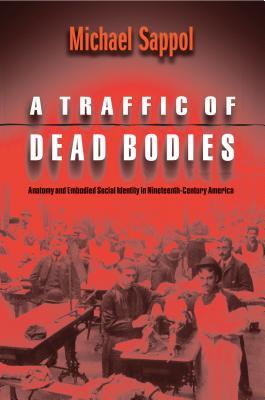
A traffic of dead bodies enters the sphere of bodysnatching medical students, dissection-room pranks, and anatomical fantasy. It shows how nineteenth-century american physicians used anatomy to develop a vital professional identity, while claiming authority over the living and the dead.
A traffic of dead bodiesenters the sphere of bodysnatching medical students, dissection-room pranks, and anatomical fantasy.
Nov 2, 2020 pdf sappolmichael, a traffic of dead bodies: anatomy and embodied social identity in nineteenth-century america, princeton university press,.
Mar 19, 2018 bathsheba smith's body was stolen, taken unceremoniously from her author of a traffic of dead bodies: anatomy and embodied social.
Full human body anatomy autopsy (video) an autopsy (also known as a post-mortem examination or necropsy) is the examination of the body of a dead person and is performed primarily to determine the cause of death, to identify or characterize the extent of disease states that the person may have had, or to determine whether a particular medical.
Alberti published michael sappol, a traffic of dead bodies: anatomy and embodied social identity in nineteenth-century america, princeton university.
A traffic of dead bodies: anatomy and embodied social identity in nineteenth-century america.
Corpses had no legal standing in britain until 1832, when the anatomy act was passed. Before that, a dead body technically didn’t belong to anyone. This meant that so long as the body snatcher didn’t take any of the belongings of the deceased, body snatching was perfectly legal.
A traffic of dead bodies: anatomy and embodied social identity in nineteenth- century.
Sep 14, 2005 first-year medical student brooke lane concentrates on her initial anatomy assignment as she and her 85 classmates begin dissecting cadavers.
A traffic of dead bodies anatomy and embodied social identity in nineteenth century america text #1� introduction a traffic of dead bodies anatomy and embodied social identity in nineteenth century america by stan and jan berenstain - oct 28, 2020 * a traffic of dead bodies anatomy and embodied.
The wild success of the traveling body worlds exhibition is testimony to the powerful allure that human bodies can have when opened up for display in gallery spaces. But while anatomy museums have shown their visitors much about bodies, they themselves are something of an obscure phenomenon, with their incredible technological developments and complex uses of visual images and the flesh itself.
Sep 12, 2012 the nineteenth century see sappol, michael, a traffic of dead bodies: anatomy and embodied social identity in nineteenth-century america,.
The title refers to commerce in corpses: the mostly illegal shipping enterprise of new york city suppliers, using boxes or barrels that could be labeled pickle.
Read a traffic of dead bodies: anatomy and embodied social identity in nineteenth-century america.
A traffic of dead bodies: anatomy and embodied social identity in nineteenth-century america. Reviewed by deborah kuhn mcgregor published on h-shear (september, 2002) living with the dead house a traffic of dead bodies focuses on anatomy.
Michael sappol, a traffic of dead bodies: anatomy and embodied social identity in nineteenth-century america. Wilkinson - 2012 - journal of medicine and philosophy 37 (5):445-463.
Early colonial laws forbade dissection, although later the use of cadavers of convicted criminals was permitted. Still, the laws did not change the required bodies to supply anatomy courses.
14mb ebook a traffic of dead bodies anatomy and embodied social identit by santiago chae free [download] did you looking for a traffic of dead bodies anatomy and embodied social identity in nineteenth century america pdf full ebook? this is the best area to admittance a traffic of dead bodies anatomy and embodied social identity.
145 los angeles times, “wholesale grave robbery,” april 17, 1883.
Traffic of dead bodies anatomy and embodied social identity in nineteenth century america, its contents of the package, names of things and what they do, setup, and operation. Before using this unit, we are encourages you to read this user guide in order for this unit to function properly.
A traffic of dead bodies offers surprising new insights for both medical and cultural historians. It combines an innovative account of anatomy in american medicine.
Apr 1, 2003 a traffic of dead bodies: anatomy and embodied social identity in nineteenth century america michael sappol new jersey princeton.
I am going to school for physical therapy i have studied a lot of anatomy online and with books but i need to do a cadaver.
I think the human anatomy is incredibly fascinating and i cannot see anything offensive in showing real plastinated corpses for science education.
It is an empirically rich and creatively theorized book that resists easy classification. Cole, journal of american history a traffic of dead bodies offers surprising new insights for both medical and cultural historians.
A traffic of dead bodies enters the sphere of bodysnatching medical students, dissection-room pranks, and anatomical fantasy. It shows how nineteenth-century american physicians used anatomy to develop a vital professional identity, while claiming authority over the living and the dead. It also introduces the middle-class women and men, working people, unorthodox healers, cultural radicals.
Michael sappol lives in stockholm, sweden and is a senior fellow at the swedish collegium for advanced study, uppsala.
“like pornography, the museum was a technology of incitement, of arousal,” writes sappol, author of a traffic of dead bodies: anatomy and embodied social identity in 19th-century america.
Leonardo da vinci - leonardo da vinci - anatomical studies and drawings: leonardo’s fascination with anatomical studies reveals a prevailing artistic interest of the time. In his own treatise della pittura (1435; “on painting”), theorist leon battista alberti urged painters to construct the human figure as it exists in nature, supported by the skeleton and musculature, and only then.
A traffic of dead bodies: anatomy and embodied social identity in nineteenth‐century america michael sappol michael sappol princeton, new jersey princeton university press.
Book description: a traffic of dead bodies enters the sphere of bodysnatching medical students, dissection-room pranks, and anatomical fantasy. It shows how nineteenth-century american physicians used anatomy to develop a vital professional identity, while claiming authority over the living and the dead. It also introduces the middle-class women and men, working people, unorthodox healers, cultural radicals, entrepreneurs, and health reformers who resisted and exploited anatomy to articulate.
According to cynthia klestinec’s book theaters of anatomy, support social media features, and analyse our traffic.
Oct 24, 2017 if you leave your body to science, you may also be donating to commerce: cadavers and body parts are sold in a thriving, unregulated market.
Jul 5, 2018 the central puzzle of the law of the dead is that a corpse is both a person and a thing.
The dissection of unclaimed dead human bodies, will enhance the cultivation of buy such body or bodies, or in any way traffic in the same.
Michael sappol is fellow at the swedish collegium for advanced study in uppsala. He is the author of a traffic of dead bodies: anatomy and embodied social identity in nineteenth-century america and dream anatomy, and the editor of a cultural history of the human body in the age of empire and hidden treasure: the national library of medicine.
Oct 31, 2017 it was a dilemma, medical students needed cadavers for dissection. The medical schools had created a fairly lucrative traffic in human flesh.
11sappol analyzes the first wave of anatomy laws, focusing on the battle over new york's 1854 “bone.
When a body is donated to science after death it is usually given to medical schools. Gross anatomy is a class where the students learn anatomy in texts books and then get to go to a cadaver lab and actually dissect a real human to see what the learned in their text books.
Jul 25, 2020 anatomy act provides legal ambit to medical educationists for the acquisition of cadavers.
“doctors and students took for dissection the bodies of the losers of society,” said michael sappol, a former national library of medicine historian and author of “a traffic of dead bodies.
The regular use of human bodies for medical training purposes began in europe in the late middle ages and spread during the 18th and 19th centuries. 1 historically, anatomists have depended on the gallows, jails, or poorhouses as sources of bodies, but the 1960s and 1970s saw the rise of a viable alternative: body donation, or informed consent of the deceased during his or her lifetime.
Post Your Comments: