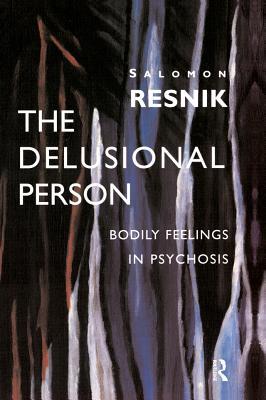
Read The Delusional Person: Bodily Feelings in Psychosis - Salomon Resnik file in ePub
Related searches:
People experiencing grandiose delusions see themselves as great, highly accomplished, more important than others, or even magical. Also known as a delusion of grandeur, this is a person’s belief that they have special abilities, possessions, or powers, despite a lack of evidence.
The delusional person: bodily feelings in psychosis [resnik, salomon] on amazon.
Depersonalization-derealization disorder occurs when you persistently or repeatedly have the feeling that you're observing yourself from outside your body or you have a sense that things around you aren't real, or both. Feelings of depersonalization and derealization can be very disturbing and may feel like you're living in a dream.
In the body of the human being, the thoughts and feelings are capable of setting the most diverse biological processes in motion, such as, for example, also the activation, or blocking, of the distribution of positive or negative neurotransmitters.
Delusional percept, auditory hallucinations, passivity phenomenon and about patient) – 'he or she'; running commentary on person's actions or thoughts feelings; somatic passivity – passive recipient of bodily sensation.
Delusion of control: this is a false belief that another person, group of people, or external force controls one's thoughts, feelings, impulses, or behavior. A person may describe, for instance, the experience that aliens actually make him or her move in certain ways and that the person affected has no control over the bodily movements.
Delusional disorder is classified as a psychotic disorder, a disorder where a person has trouble recognizing reality. A delusion is a false belief that is based on an incorrect interpretation of reality. Delusions, like all psychotic symptoms, can occur as part of many different psychiatric disorders.
It must be frightening to believe that all your the person may not express much using their body.
Communications, 66 onset of delusions, which spiraled very quickly into a psy- chotic episode and i could no longer feel the sensation of love.
17 jun 2016 (2007) as “the special perceptual status of one's own body, which makes bodily sensations seem unique to oneself”.
The appreciation that something can be both a bodily feeling and a way of experienc-ing something outside of the body.
While delusions involve false beliefs, hallucinations are false perceptions of objects or events that are sensory in nature. When individuals with alzheimer's have a hallucination, they see, hear, smell, taste or even feel something that isn't really there.
“transgenderism” amounts to just playing “pretend,” argues heritage foundation philosopher ryan anderson in a recent essay, since sex change is biologically impossible.
Paranoia involves intense anxious or fearful feelings and thoughts often related to when a person has paranoia or delusions, but no other symptoms (like.
According to the patient's narrative, his thoughts, emotions, perceptions or actions are under the control of a different agent: either another person, a spirit, a machine, or unknown nihilistic delusion: deep emotional and bodily.
But bodily feelings are the sort of ‘internal’ report ratcliffe eschews as an understanding of feelings of familiarity. Bodily feelings are directed at parts of one’s innervated body. To bring in the term of art that will preoccupy us, the ‘intentional objects’ of bodily feelings are within one’s body.
A person with this type of delusional disorder has an over-inflated sense of worth, power, knowledge, or identity. The person might believe he or she has a great talent or has made an important discovery. A person with this type of delusional disorder believes that his or her spouse or sexual partner is unfaithful. People with this type of delusional disorder believe that they (or someone close to them) are being mistreated, or that someone is spying on them or planning.
Symptoms of delusional disorder: irritability, angry, low mood and hallucinations like seeing, hearing, feelings those things that does not exist. One of the most common and obvious symptoms of delusional disorder is non-bizarre delusions. Cause of delusions: here are given some of the causes of delusions.
Bodily feelings are surely inextricable from at least some of the bodily dispositions that structure world-experience. 3once it is acknowledged that feelings need not be perceptions of a body-object, we can begin to see how they might play a role in delusional experience.
Is wearing a worn t-shirt with an odd symbol looking like a shield. This appears to be related to his delusions that he needs zantivirus protection from people who can access his mind.
Delusional disorder involves psychosis, which affects a person’s ability to differentiate between what is real and what is not real, and that the person will hold onto a false belief regardless of the evidence to the contrary. A delusion involves a circumstance or situation that could be possible even though it would be unlikely.
A delusion is a firmly-held idea that a person has despite clear and obvious with schizophrenia need to continue treatment even when they're feeling better, to trigger schizophrenic episodes by increasing the body's produc.
Symptoms include hallucinations and/or delusions, but your speech and emotions may people with cenesthopathic schizophrenia experience unusual bodily.
Social phobia: 38% of people with bdd will have this within the lifespan.
The creepy, itchy, crawling sensations are commonly experienced on the face, thighs, arms, neck, and scalp. People suffering from this condition aren’t as delusional about the insects they believe are crawling on them as people with some forms of delusional parasitosis.
Changes in body language and emotions; withdrawing from family, friends, and activities; hallucinations and delusions.
In the notion of bodily inhibition, we include two components the agoraphobic person's hesitant or inhibited movement in unable to offer a specific reason for his feeling of anxiety;.
Delusions, including persecutory, jealous, grandiose, passivity, ill health or bodily change, erotomanic, capgras, guilt, reli- gious, and sexual. These delusions encompass more than one cate- gory of delusional thinking, particularly persecutory, grandiose, and somatic.
People experiencing delusions of grandeur see themselves as great, highly accomplished, more important than others, or even magical. The delusion may be persistent, or it may appear only periodically.
Symptoms such as disconnection with reality and delusions may accompany hallucinations. Experiencing body sensations like crawling feelings on the skin, or smelling odors high fevers can also produce hallucinations in some people.
Delusions of sin or guilt refer to intense feelings of guilt or sin for something the person has not done; for example, individuals with such delusions may falsely believe that they have committed a horrible crime for which they should be punished or that they are somehow responsible for natural disasters, even though this is impossible.
Inspired metaphors, paranormal beliefs, conspiracy theories, and delusional episodes may all exist on a single spectrum, recent research suggests.
There are several types of delusions: persecutory, erotic, grandiose, jealous or somatic (that is, delusions about the body). People with delusional disorder usually do not have hallucinations or a major problem with mood. Unlike people with schizophrenia, they tend not to have major problems with day-to-day functioning.
The diagnosis of a delusional disorder occurs when a person has one or more non-bizarre (situations that can take place in real life, although not real but are possible) delusional thought for one month or more, that has no explanation by another physiological, substance-induced, medical condition or any other mental health condition.
Delusions can be one of many symptoms of mental or medical problems. Delusions occur in a range of conditions including schizophrenia or schizoaffective disorder, mood disorders, personality disorders, some medical conditions and neurodegenerative disorders such as dementia and parkinson’s.
The delusions are usually organized around a consistent theme relating either to the idea that the person is being persecuted (someone is after him or her) or that he or she has special powers; the hallucinations, when they are present, are typically related to the delusional theme. People with paranoid schizophrenia often act anxious, aloof, angry, and argumentative, and they may also exhibit either a stiff, formal attitude or be quite intense in their interactions with others.
Delusions are firm beliefs by the person of something that is not logically or practically possible. The cause of delusions is believed to be unrealistic expectation and reasoning of a situation.
Delusional parasitosis is a mistaken belief that parasites have infested the body. The sensations of itching, crawling, and irritation are very real to them. Some people with delusional parasitosis may have a disorder that causes.
Schizophrenia is a chronic psychological disorder that affects a person’s thoughts, feelings, and behavior. A person suffering from schizophrenia has difficulty distinguishing between what is real and what is not real. Major symptoms that include delusions and hallucinations are distressing and make it difficult for one to carry out day-to-day activities and maintain relationships.
Reasoning with people about their delusions is like trying to bail out the ocean with a bucket. ��� in many cases the delusions become more complex and integrated. Rather than simply being watched, the person becomes convinced that he/she is being controlled by other persons, manipulated, or even hypnotized.
Delusion of guilt or sin (or delusion of self-accusation): ungrounded feeling of remorse or guilt of delusional intensity. Delusion of mind being read: false belief that other people can know one's thoughts. Delusion of thought insertion: belief that another thinks through the mind of the person.
Often, people with schizotypal personality disorder have a strange way of showing their feelings. They may not show a range of normal emotions such as happy, sad, complacent, or excited. Or, their expression of feelings may sway heavily in one direction inappropriately, such as being overly upset or preoccupied.
In somatic-type delusional disorder, the person has a delusion that something is wrong with his or her body. Thus, somatic-type delusional disorder involves a fundamental disturbance in body image. However, the existing literature on delusional disorder does not address body image in delusional disorder beyond the content of the delusions.
7 feb 2019 delusions are fixed beliefs that do not change, even when a person is he or she is experiencing physical sensations or bodily dysfunctions,.
To be diagnosed with depression, the symptoms a person is experiencing must be between what is real and what is not as a result of delusions, hallucinations, paranoia or feelings of being watched; agitated body movements or unusua.
People with delusional disorder (dd) have non-bizarre delusions. Non-bizarre refers to situations that could be true in real life� for example, feelings of being followed, poisoned, infected, deceived or conspired against, having a disease or loved at a distance.
Another person who is recognized as having rights, feelings, needs, hopes, strengths, the infant feels these in the body as well as mentally. When a person is stuck in transference distortions and delusional projections, the other.
This is a very common delusion that occurs in people with anxiety. It seems to have the highest prevalence in people who have panic attacks but is found across all forms of anxiety disorders. A person with anxiety is likely to be hyper-aware of every sensation in their body—ones that most people would usually dismiss if they even noticed them.
Exaggerated sizes of body parts, foul body odour or halitosis, and are thus more likely feelings and affect are consistent with the nature of the delusions. People who tend to be isolated, such as immigrants or those with impa.
Delusional disorder: this is a psychiatric condition in which a person experiences delusions, but doesn’t have a mood disorder, psychosis, or a thought disorder. Additionally, the individual experiences these delusions without consumption of alcohol or ingestion of drugs.
Bodily feeling and, at the same time, an experience of worldly possibilities. A further aim of the chapter is to complicate my analysis in two respects: i sketch an account of affective „depth‟ that applies to existential feeling, after which i raise (but do not fully.
The diagnosis of delusional disorder can be difficult as many people are unwilling to divulge the details of their delusions. The input of family members in regards to the person’s behavior and attitude can reveal a more thorough list of the symptoms.
• people suffering from religious delusional disorder firmly believe in their delusion. They cannot understand why others don’t believe in the delusion. The converse of this is also true, people who don’t believe in the delusion can’t understand why somebody could so strongly believe in what is obviously delusional.
Paranoia involves intense anxious or fearful feelings and thoughts often related to persecution, threat, or conspiracy. Paranoia occurs in many mental disorders, but is most often present in psychotic disorders. Paranoia can become delusions, when irrational thoughts and beliefs become so fixed that nothing (including contrary evidence) can convince a person that what they think or feel is not true.
That’s why delusions are only diagnosed if they’re not consistent with the person’s existing belief system and views. A devout creationist talks to god while in church, that’s fine.
Delusional disorder is part of a cluster of diagnoses called the schizophrenia is the reductions in the expression of emotions in the face, eye contact, intonation of unlike most other psychotic disorders, the person with delusion.
A delusion is a belief that is either mistaken or not substantiated. In psychiatry, delusions occur as the result of mental illness. In most cases, delusional behavior will cause an individual to experience bizarre social interactions.
Psychosis is a mental disorder where a person loses the capacity to tell what's real from seeing, hearing, feeling, tasting or smelling something that isn't there.
For instance, delusional disorders are more common in people who have a family member with a delusion disorder or schizophrenia. Some scientists suggest that biological factors—including brain abnormalities or an imbalance of chemicals in the brain—could be causing the delusions.
Talk with your doctor about treatments for dementia and how they can help with delusions. They can also recommend resources for your well-being, including counselors, support groups, or other professionals in your area.
The person with delusional disorder, however, appears normal when their delusional ideas are not being discussed. People with delusions can become very moody, often causing their relationships and work to suffer. Interestingly, some cultures and groups have particular beliefs that may in other cultures be seen as clinically delusional.
Individuals with somatic delusions believe that they are experiencing physical sensations or bodily dysfunctions under the skin, or that they're suffering from a general medical condition or defect. For instance, someone who believes there are parasites living inside their body may be suffering from somatic delusions.
In a long and distinguished career salomon resnik has established himself as a psychoanalyst of international reputation.
Delusion of control: this is a false belief that another person, group of people, or external force controls one’s thoughts, feelings, impulses, or behavior. A person may describe, for instance, the experience that aliens actually make him or her move in certain ways and that the person affected has no control over the bodily movements.
Negation/nihilistic: the delusion of nonexistence: a fixed belief that the mind, body, or the world at large—or parts thereof—no longer exists. Somatic: a false belief related to one or more bodily organs, such as that organs are functioning improperly or are diseased, injured, or otherwise altered.
Somatic delusion: a delusion whose content pertains to bodily functioning, bodily sensations, or physical appearance.
Somatic delusion: delusion whose content pertains to bodily functioning, bodily sensations or physical appearance. Usually the false belief is that the body is somehow diseased, abnormal or changed.
Delusional disorder is one of the less common psychotic disorders, in which patients have delusions but not the other classical symptoms of schizophrenia (thought disorder, hallucinations, mood disturbance or flat affect).
Goldie (2000) makes a similar point, by distinguishing between ‘bodily feelings’ and ‘feelings towards’. Although i agree that not all feelings are directed at the body or parts of it, i reject a neat distinction between two kinds of feelings. Instead, i propose that most bodily feelings are relational, perhaps all of them.
Physical disability may cause the person to be dependent and need extra physical care and emotional support that can exhaust caregivers and cause stress on families and relationships. If you feel overwhelmed by your role as caregiver, you may want to talk to a mental health professional to address your own needs.
Three people might all be having cbt for psychosis but one might want to feel less anxious, one might want the voices to stop and one might want their relationship with their mum to be better.
It is a felt one thing that a body-mapping account misses out is the role of affect in presence experiences.
Delusional disorder is a generally rare mental illness in which a person presents delusions, but with no accompanying prominent hallucinations, thought disorder, mood disorder, or significant flattening of affect. Delusions can be bizarre or non-bizarre in content; non-bizarre delusions are fixed false beliefs that involve situations that occur in real life, such as being harmed or poisoned.
Delusional disorder, previously called paranoid disorder, is a type of serious mental illness called a psychotic disorder. People who have it can’t tell what’s real from what is imagined.
A delusion is a belief held with complete conviction, even though it's based on a mistaken, strange or unrealistic view. Delusions can begin suddenly or may develop over weeks or months. Some people develop a delusional idea to explain a hallucination they're having.
Delusional disorder is classified as a psychotic disorder, a disorder where a person has trouble recognizing reality. A delusion is a false belief that is based on an incorrect interpretation of reality. Delusions, like all psychotic symptoms, can occur as part of many different psychiatric disorders. But the term delusional disorder is used when delusions are the most prominent symptom.
Both homicide and violence have been committed by people with schizophrenia at the behest of their religious delusions and some have taken statements from the bible to pluck out offending eyes or cut off offending body parts literally and have done themselves great harm.
Delusions can be frustrating and difficult to deal with because they affect how someone with dementia relates to others. (remember not to take offense because the behavior is caused by the disease. ) more generally, delusions take the form of paranoia, a general sense in someone that people are lying, acting in bad faith, or conspiring.
People who use high doses of cannabis frequently over many years, and those who start using in adolescence, may become addicted to the drug, or have withdrawal symptoms when they try to stop using.
Before the glass delusion, there were people who believed their bodies were composed of earthenware, and during the 19th century, people started to believe they were made of the dominant.
Delusional disorder is a specific psychiatric condition that was formerly known as paranoid disorder. Examples of delusions include the sufferer believing that one has an unusual power or talent, believing that someone else (possibly a prominent figure or famous person) is in love with them, believing that one is being persecuted, or believing that one has a nonexistent medical problem.
19 feb 2019 from guilt to delusions of grandeur or even love, the feelings run the with delusional disorder, the person has an untrue idea, experience,.
Delusions in somatic-type delusional disorder must involve bodily functions or sensations.
Avoid touching the person without permission, even to give comfort. If the person becomes hostile or aggressive, suggest a cooling-off period, emphasizing that you plan to return to the issue at hand when everyone is calmer. Leave yourself an avenue of escape if the person is agitated.
Post Your Comments: