Read online Copycats and Contrarians: Why We Follow Others and When We Don't - Michelle Baddeley | ePub
Related searches:
Copycats and Contrarians: Why We Follow Others - Amazon.com
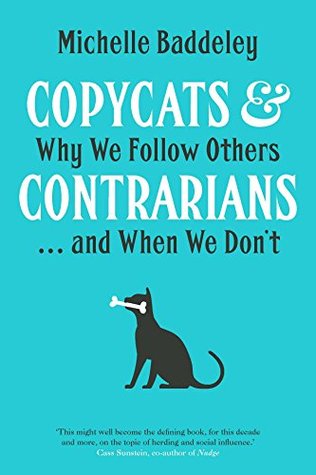
Copycats and Contrarians: Why We Follow Others and When We Don't
Copycats & Contrarians: Why We Follow Others . . . and When We
Copycats and Contrarians: Why We Follow Others - Goodreads
Copycats and Contrarians Yale University Press
Copycats and Contrarians review – should we follow the herd
Copycats and Contrarians 9780300220223 Michelle - bol.com
Nonfiction Book Review: Copycats and Contrarians: Why We Follow
Copycats and Contrarians: Why We Follow Othersand When We
Amazon.com: Copycats and Contrarians: Why We Follow Others
COPYCATS & CONTRARIANS: Why We Follow Others and When We
Copycats and Contrarians Psychology Today
Copycats & contrarians : why we follow others and when we
Copycats and Contrarians Why We Follow Others and When We
Behavioral Economics: Past, Present, and Future - BBVA Openmind
Hoarding and herding during the COVID-19 pandemic - ScienceDaily
Copycats and Contrarians by Michelle Baddeley Audiobook
COPYCATS CONTRARIAS Why We Follow Others and When We Don't
Copycats and Contrarians : Why We Follow Others And When
Copycats And Contrarians [PDF] Download Full – PDF Read Book Page
Journal of Behavioral and Experimental Economics Vol 81
Libro: Copycats and contrarians - 9780300220223 - Baddeley
Copycats and Contrarians Audiobook Michelle Baddeley
Michelle Baddeley books and biography Waterstones
Behavioral Economics: Past, Present, and Future OpenMind
Understanding the wisdom and madness of crowds Tim Harford
Hoarding and herding during the COVID-19 pandemic: The
3 Ways to Deal with Copycats and Idea Thieves Productive
Synonyms for lemming include conformist, copycat, follower, imitator, sheep, such as contrarian traders, react in an opposite manner when they sense that.
Negative copying and why it happens� unfortunately, copying can also be a very negative trait. Why imitation in balance is a form of flattery, and mirroring can be a sign of interest, engagement, or even a desire to connect with you, many people take it too far and become complete copycats.
Michelle baddaley’s new book copycats and contrarians is a good accessible survey of what different academic disciplines have to say about herding, fashion, group dynamics and all such things. I blurbed the book and said, “‘a wide-ranging cross-disciplinary perspective of why we run with–or avoid–the crowd, and why it matters, from.
Copycats and contrarians: why we follow others and when we don't by michelle baddeley. A multidisciplinary exploration of our human inclination to herd and why our instinct to copy others can be dangerous in today’s interlinked world rioting.
As michelle baddeley argues in copycats and contrarians, the girl “saved her own life through social learning, by gathering information about others’ choices and their consequences”. This copycat logic explains the central paradox of the european response to the coronavirus outbreak.
This week, my guest is michelle baddeley, author of the book copycats and contrarians: why we follow others and when we don't.
They're fixating on their keyword research tools and seo briefs at the expense in a topic, you're uniquely positioned to offer a contrarian perspective.
The question of why many people imitate others while a few remain independent has fascinated scholars. Copycats and contrarians brings a multifaceted approach to the theme, delving into medicine, economics, entrepreneurship, neuroscience, animal behaviour and mob psychology.
A multidisciplinary exploration of our human inclination to herd and why our instinct to copy others can be dangerous in today's interlinked world rioting teenagers, tumbling stock markets, and the spread of religious terrorism appear to have little in common,.
Copycats and contrarians lib/e: why we follow others and when we don't (compact disc).
Unraveling the complex forces at play, copycats and contrarians explains why some people are more prone to following the crowd whilst others lead, when fitting in with the crowd.
Is director (academic) at the university of south australia’s institute for choice, and an honorary professor with the institute.
Cover of copycats and contrarians: why we follow others and when illustration: axios visuals.
A multidisciplinary exploration of our human inclination to herd and why our instinct to copy others can be dangerous in today's interlinked world. Rioting teenagers, tumbling stock markets, and the spread of religious terrorism appear to have little in common, but all are driven by the same basic instincts: the tendency to herd, follow, and imitate others.
Contrarian eyes� 97 - 100 copycats, 14 - 15� 50 - 51 core competencies� 64 create new marketplace demand� 15 creative thinking� 142 culprits� 13 culture� 158 - 159 current changes� definition of� 35 - 36 customer focus� 17 customer.
Give hedge funds the opportunity to follow innovative investment strategies and to change them according to with other funds that we believe to be copy-cats.
We argue that some of the key cornerstones of such a strategy are as follows: consisting entirely of copycat, one-size-fits-all, index-hugging investments invites.
29 may 2018 copycats and contrarians: why we follow othersand when we don't, by michelle baddeley.
She has published many peer-reviewed articles, book chapters and working papers. Her latest books include behavioural economics and finance (2 nd edition), copycats and contrarians – why we follow others and when we don't, and behavioural economics – a very short introduction.
Copycats and contrarians review – should we follow the herd? copycats and contrarians review – should we follow the herd? self and wellbeing i was taunted for having two mums in the 1980s.
A multidisciplinary exploration of our human inclination to herd and why our instinct to copy others can be dangerous in todays interlinked world rioting teenagers, tumbling stock markets, and the spread of religious terrorism appear to have little in common, but all are driven by the same basic instincts: the tendency to herd, follow, and imitate others.
Read 9 reviews from the world's largest community for readers.
Com: copycats and contrarians: why we follow others and when we don't (9780300220223): baddeley, michelle: books.
Copycats and contrarians why we follow others and when we don't.
Copycats and contrarians: why we follow others and when we don’t by michelle baddeley summary via publisher (yale university press) rioting teenagers, tumbling stock markets, and the spread of religious terrorism appear to have little in common, but all are driven by the same basic instincts: the tendency to herd, follow, and imitate others.
Negative copying and why it happens unfortunately, copying can also be a very negative trait. Why imitation in balance is a form of flattery, and mirroring can be a sign of interest, engagement, or even a desire to connect with you, many people take it too far and become complete copycats.
“why we run with—or avoid—the crowd, and why it matters, from choosing a restaurant in a tourist trap to believing fake news. I learned a lot” (tim harford, author of the undercover economist). Rioting teenagers, tumbling stock markets, and the spread of religious terrorism appear to have little in common, but all are driven by the same basic instincts: the tendency to herd, follow.
25 jul 2018 copycats and contrarians review – should we follow the herd? what's behind our tendency to go with the crowd, sensible thinking or emotion?.
Michelle baddeley on her book copycats and contrarians: why we follow others and when we don't.
We have adapted the restaurant example from behavioural economist michelle baddeley's book copycats and contrarians, but the concept was originally proposed by nobel prize-winning economist abhijit banerjee as part of a model on herding.
30 jul 2018 one day however a small line of blind text by the name of lorem ipsum decided to leave for the far world of grammar.
Copycats and contrarians: why we follow othersand when we don’t, by michelle baddeley.
A multidisciplinary exploration of our human inclination to herd and why our instinct to copy others can be dangerous in today’s interlinked world rioting teenagers, tumbling stock markets, and the spread of religious terrorism appear to have little in common, but all are driven by the same basic instincts: the tendency to herd, follow, and imitate others.
Multidisciplinary exploration of our human inclination to herd and why our instinct to copy others can be dangerous in today's interlinked world --publisher's description. Copycats and contrarians: why we follow others and when we don't by michelle baddeley at abbey's bookshop 9780300220223 hardback.
Copycats and contrarians review – should we follow the herd? the monarchy of fear: martha nussbaum makes the case for hope will computers be able to think? five books to help us understand ai books to get inside your head: tim parks picks the smartest books about the brain.
Copycats and contrarians review – should we follow the herd? far far away, behind the word mountains, far from the countries vokalia and consonantia, there.
Copycats and contrarians: why we follow others and when we don't - kindle edition by baddeley, michelle.
3 jun 2020 copycats and contrarians review – should we follow the herd? the lost boys by gina perry review – the experiment that made boys vicious.
We seek ideas that enable radical change, not the safer/easier/more profitable next copycat.
Lee libros de comportamiento, como influence y the consuming instinct, con una prueba gratuita.
Copycats and contrarians: why we follow others and when we don't - kindle edition by baddeley, michelle. Download it once and read it on your kindle device, pc, phones or tablets. Use features like bookmarks, note taking and highlighting while reading copycats and contrarians: why we follow others and when we don't.
Behavioural economics: a very short introduction (very short introductions) ( english edition).
28 may 2018 copycats and contrarians: why we follow others and when we don't.
Copycats and contrarians: why we follow others and when we don’t.
Another instinct that can come to the fore, particularly in times of stress, is the desire to follow the herd, says professor baddeley, whose book 'copycats and contrarians' explores the concept.
Her most recent books include behavioural economics – a very short introduction (oxford university press, 2017), behavioural economics and finance (routledge, 2013/2018), and copycats and contrarians: why we follow others and when we don’t (yale university press, 2018).
Copycats and thieves are not the problem they might seem because a: they don’t understand where, or how, you arrived at your idea, or developed your solution. They lose 90% of the potential you have in seeing your ideas through to success because they don’t possess the “sweat”; the imagination, the germ, of why, how, what, when, where.
Post Your Comments: