Download Donor Portraits in Byzantine Art: The Vicissitudes of Contact Between Human and Divine - Rico Franses | ePub
Related searches:
Byzantine Dedicatory Inscriptions and Donor Portraits (7
Donor Portraits in Byzantine Art: The Vicissitudes of Contact Between Human and Divine
(PDF) Identity and Patronage in Byzantium: Epigraphic
The Mary Jaharis Center for Byzantine Art and Culture
Sailing to Byzantium - Patronage and the Chora Monastery in
Inscriptions: Their Contribution to Byzantine and Post
The light and divinity of Byzantine art – Catholic Philly
SEX, LIES, AND MOSAICS: THE ZOE PANEL AS A REFLECTION
Heaven and Earth: Art of Byzantium from Greek Collections at the
Portraits and Icons: Between Reality and Spirituality in
Byzantine Art as Propaganda: Justinian and Theodora at
San Vitale and the Justinian Mosaic – Smarthistory
Book Review: Katherine Marsengill, Portraits and icons
A&AePortal ~Early Christian and Byzantine Art
Com: donor portraits in byzantine art: the vicissitudes of contact between human and divine (9781108418591): franses, rico: books.
Portraits of saints in byzantine art was very popular and it was no different.
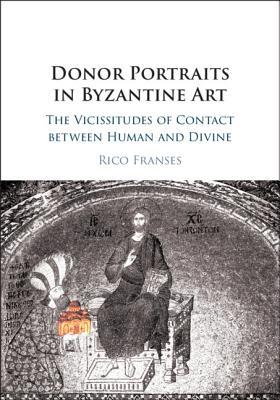
In byzantium, people often had themselves shown in, or on, the holy object they had paid for, together with the holy figure to whom it was dedicated. In this book, rico franses takes this concept of ‘donor portrait’ and subjects it to an intense critical re-evaluation.
Byzantine art, the visual arts and architecture produced during the middle ages in the byzantine empire. Almost entirely concerned with religious expression, byzantine art is known for the mosaics covering the interior of domed churches. They often feature flat and frontal figures floating on a golden background.
Byzantine portraits embody a spiritual presence and the eyes play the role of the protagonist! thus, eyes are affectionately called the windows of the soul! “the art of portraiture during the byzantine period” is an activity i use in my grade 7 art history class on byzantium.
Simply called “donor” or “imperial portraits” and that belong to both constan-tinopolitan and wider circles under byzantine cultural domain is exemplary. Such juxtaposition of well-known and rarely examined examples provides an impressive springboard for further refined studies of both portraiture and icons in the byzantine world.
The portrait in byzantine illuminated manuscripts iōánnīs spatharákīs brill archive� 1976 - illumination of books and manuscripts, byzantine - 287 pages.
Oct 27, 2020 download citation donor portraits in byzantine art: the vicissitudes of contact between human and divine.
Donor portraits in byzantine art: the vicissitudes of contact between human and divine.
May 16, 2013 byzantine monumental art as historical evidence: the testimony of church inscriptions, donor portraits and iconography.
Feb 16, 2012 chapter 5 explores how donor portraits in germany and austria could it “ alluded to his desire to put an end to byzantine dominance in istria”.
Middle byzantine secular architecture and urban planning middle byzantine secular art basilica of santa maria assunta, torcello saint mark’s basilica, venice a byzantine vision of paradise — the harbaville triptych the fourth crusade and the latin empire byzantine art and the fourth crusade plunder, war, and the horses of san marco.
Nov 12, 2017 in these portraits, the donor is usually shown in a stance of prayer, whereas the saint is behind them with a hand on the donor's shoulder.
Donors in the frames of icons: living in the borders of byzantine art more. This article collects instances of byzantine icons in which portraits have been placed not in the field of the holy figure, but within the icon's frame. The portraits are called donor portraits, as icons were gifts to god and the holy more.
The byzantine art is in particular the art of the byzantine empire, which existed from the 4th century to the 15th century. In addition, it also includes art in the byzantine neighboring countries of the former empire in the middle east, the caucasus, the balkans and the countries around the caspian sea and russia.
This book explores the range of images in byzantine art known as donor portraits. It concentrates on the distinctive, supplicatory contact shown between ordinary, mortal figures and their holy, supernatural interlocutors. The topic is approached from a range of perspectives, including art history, theology, structuralist and post-structuralist anthropological theory, and contemporary symbol and metaphor theory.
Donor portraits are very common in religious works of art, especially paintings, of the middle ages and renaissance, the donor usually shown kneeling to one side, in the foreground of the image. Often, even late into the renaissance, the donor portraits, especially when of a whole family, will be at a much smaller scale than the principal figures, in defiance of linear perspective�.
6th century donor portrait of anicia juliana, the byzantine princess who commissioned the illuminated manuscript known as the vienna dioscurides.
Dec 20, 2019 using bright stones, gold mosaics, lively wall paintings, intricately carved ivory, and precious metals in general, byzantine artists beautified.
All romanian artists are exposed to byzantine art from their childhood. Both in the 'donor' and 'fresco' examples, the paintings are partly realistic and partly.
Franses donor portraits in byzantine art: the vicissitudes of contact between human and divine.
The imperial portrait the cult of the emperor was transmitted to the subjects in a direct and also indirect way, by imposing high execution standards of the portraits of byzantine sovereigns. Thus, the images of emperors replaced, in a symbolic way, in their.
The domed structures of byzantine architecture still influence architects today. What is byzantine art? – definition, history, and key facts. The byzantine art comes from the byzantine empire and it was the name of the products in this empire.
To refer to byzantine art, we must also refer to the byzantine empire, which extended for more than a thousand years, from the fourth century until constantinople fell in the year 1543. After the roman empire fell, the byzantine empire remained for many years, adopting the roman legacy� greek culture and also the christian faith�.
The stereotype of byzantine art as static and unchanging still compels sometime before 1050. 1 this mosaic is an imperial donor portrait and is remarkable.
Summary this book explores the range of images in byzantine art known as donor portraits. It concentrates on the distinctive, supplicatory contact shown between ordinary, mortal figures and their holy, supernatural interlocutors.
Byzantine art, byzantine history, byzantine studies, serbian medieval art, medieval mediterranean art, postbyzantine art, and 22 more byzantine iconography, donor portraits, imperial portraits, medieval portraiture, byzantine monasticism, sacred space, mount athos studies, medieval balkans, balkan studies, serbian medieval history, serbian.
And if one excluded the donor's portrait, it was merely in the choice and interpretation of religious art that the influence of the patron was able to exercise itself.
29-dic-2018 - estudio sobre las imágenes de los promotores en el arte bizantino, abordado desde una amplia gama de perspectivas.
The portraits are called donor portraits, as icons were gifts to god and the holy figures depicted.
Topics range from the dress found in sixth-century roman mosaics, to the jewelry of mamluk islam, to the armor of late medieval frontiers of egypt, to resonances of eastern textiles on english floor tiles. Depictions of donor portraits from late byzantine and cretan icons will further explain the ways that dress dictates meaning.
May 26, 2009 although the donor portrait was extremely popular throughout europe and mainland italy during the late middle ages, the few art historians who have portraits in venice compare with those from europe and byzantium?.
Marsengill's comprehensive treatment of portraits cannot be only and simply called donor or imperial portraits and that belong to both constantinopolitan and wider circles under byzantine cultural domain is exemplary.
An attempt has been made to present early christian and byzantine art as a panoramic story which is meant to be read rather than consulted. It is emphasized that the book is neither dictionary nor encyclopedia, neither catalogue nor hand-list.
Jul 7, 2018 although the grandeur suggests the influence of byzantine icons, the realism and it might also be seen as a donor portrait of nicolas rolin.
All of these donor portraits were painted between 1564 and 1606 in churches of saint nicholas of dabar ‒ banja near priboj (1564), budisavci (1568), morača (1574), saint trinity near pljevlja (1592, 1594/1595) and piva (1604−1606).
Perhaps they are best measure of byzantine imperial ambition as well. “[n]o other work of art��� conveys the spirit of byzantium with so much eloquence as do these two mosaics. ” (10) the flatness of frontal pose, dominant for a static millennium in byzantine art, makes it difficult to gauge movement or anything beyond monumental eternity.
Please contact the current institution’s library for further details.
Well as of donor portraits in byzantine churches, primarily of mainland greece and the islands and secondarily of other regions, with the declared aim of studying patronage and its different patterns. The collected material is organized in four interrelated databases, concerning the monuments, the inscriptions, the portraits, and the persons.
Post Your Comments: