Download Cyber-Risk and Youth: Digital Citizenship, Privacy and Surveillance - Michael C. Adorjan file in PDF
Related searches:
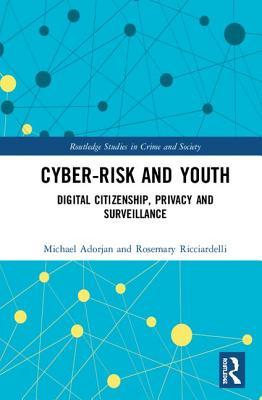
Cyber-risk and Youth: Digital Citizenship, Privacy and Surveillance
Cyber-Risk and Youth: Digital Citizenship, Privacy and Surveillance
(PDF) Cyber-Risk and Youth: Digital Citizenship, Privacy, and
YOUTH AND CYBERSAFETY - Cyber Science Center
Cyber-Risk and Youth Taylor & Francis Group
Cyber-Risk and Youth - ResearchGate
Social Cyber Threats Facing Children and Teens in 2018 - Stay
Routledge and CRC Press Social Impact of Computing & IT on
Digital Asset Valuation and Cyber Risk Measurement - 1st Edition
Youth online safety and cybercrime prevention Research
CYBER RISK APPETITE - RSA Cybersecurity and Digital Risk
After reading, writing and arithmetic, the 4th 'r' of
Development of the digital and socio-civic skills (DIGISOC
Cybersecurity, cybercrime and public safety in the digital age
How to help children avoid cyber risks and thrive in an
Cyber bullying and Social Media HASTAC
“the study provides a deeper understanding of the filipino students’ online behaviour. With globe telecom’s digital thumbprint program (dtp), we hope to further equip the youth to adopt to the new digital environment and help shape the future leaders in our country,” said globe senior vice president for corporate communications yoly crisanto.
Although it may seem that malware attacks and cybercrime live in the adult world, cyber thieves regularly target children and teens where they’re most active – chat rooms, social media, video streaming sites and online video games.
Children are using digital technology at increasingly young ages and are frequently – and unknowingly – exposed to widespread cyber risks including online strangers, game addiction, cyber bullying, sexual and violent content, and victimization.
Ry; interpretive and comparative criminology; youth and cyber-risk current research projects (institutionally funded) june 2015 – june 2017 pi, with rose ricciardelli, memorial university, “cyber-risk, youth and commu-nity: digital citizenship in canada.
Recent research topics include international health governance, immigration and employment, patterns of offending, gender tranformative youth programming, restorative justice and racialized youth, issues in healthcare and professional work, urban cycling, anime fandom, social inclusion of black african youth, discourses of sexual assault.
Cybersecurity initiative for the youth cybersecurity is a growing and imminent need in our nation and throughout the world, and there is a critical talent shortage. Our cybersecurity initiative helps the youth learn best practices for online safety, learn key concepts of cybersecurity basics, and explore career pathways in the cybersecurity field.
View daniela fernandez palacios’ profile on linkedin, the world’s largest professional community. See the complete profile on linkedin and discover daniela’s connections and jobs at similar companies.
When digital surveillance is higher than ever, there is a hollowing out of learning, a shallowness that comes with abuses of privacy and surveillance and from a loss of cherished human contact. Tilleczek’s studies have revealed that several youth suggested that without the phone, they lacked the confidence to solve basic problems or feared for their safety.
Boosting digital literacy isn’t a one-size-fits-all type of situation. But with the ever-evolving digital space, it’s hard to talk about universal evergreen guidelines that suit every need. Digital literacy, and especially cyber risk literacy, needs to be improved through a balanced combination of key factors.
We want to minimize cyber risk and maximize children’s potential, and the dq score is an indication of how ready they are to go online. Net, there are eight modules on eight key digital skills that children learn in an hour a day for eight days.
Cyber-risk help reporting system for children can detect a child’s exposure to various cyber-risks and provide opportunities to proactively intervene. Singapore and australia will be the first countries to pilot the system through public-private partnerships with dq institute.
Digital assistants are always listening, creating a significant security risk as the threat of we need to start teaching young children about cybersecurity.
Naturally, these facts and figures are just the tip of the iceberg. The deeper we dive into the wealth of information cybersecurity reports now offer, the clearer and more unnerving the picture becomes.
Youth online safety and cybercrime prevention the dark side of the digital age has a high profile in the media, with a particular focus on young people. Rapid technological advances have seen systems and institutions struggle to keep pace in developing policies and procedures that are relevant and useful to modern society.
Cyber- risk and youth cyber- risks are moving targets and societal responses to combat cyber- victimization are often met by the distrust of young people.
The digital youth program (dyp), developed in 2012, aims to help children master the basics of reading, science, personal health, math, and foreign languages by providing depreciated and pre-owned deloitte computers with access to quality online best-in-class courseware from international ngos, like e-learning for kids.
Given the importance of digital technology in our lives, technological advances will only continue to heighten cyber-risk challenges. More than four billion records were compromised in the first six months of 2019, according to risk based security’s “data breach report.
For myself and my colleagues across kpmg member firms, interacting with enthusiastic young students regarding digital world and cyber risk, an issue of critical.
To address this issue, deloitte and the global business coalition for education have co-authored a new research study, which examines the skills young people will need in the future, and recommends solutions for business to help them.
“school closures and strict containment measures mean more and more families are relying on technology and digital solutions to keep children learning, entertained and connected to the outside world, but not all children have the necessary knowledge, skills and resources to keep themselves safe online”, said howard taylor, executive director of the global partnership to end violence.
Cyber-risk education is often left to the private sector, which can overlook underserved populations like seniors, who tend to be the least digitally savvy demographic. Many are using the internet more frequently, especially during coronavirus, putting them at greater risk of cyber-fraud.
The main goal of the project is to guide youth in their cybersecurity professional journey by creating a global network of students and young people as active.
Student perspectives towards school responses to cyber-risk and safety: the presumption of the prudent digital citizen.
Check back regularly, we'll be expanding the courses available - each designed to take your digital knowledge to the next level.
Review digital innovations and the emerging issues in cyber security and risk landscape. Examine the interdependencies between business/innovation strategy, organisation’s digital risk appetite, tolerance and culture and its relevance to implementing digital initiatives and strategies.
Managing cyber risk is not just a cost to the business, but a positive investment to enable the success of strategic growth and performance initiatives,” contributes deloitte advisory cyber risk services. Prioritization given the myriad sources of cyber risk, with each event having different levels of potential impact, prioritization is critical.
8 nov 2020 pdf on dec 19, 2018, michael adorjan and others published cyber-risk and youth: digital citizenship, privacy, and surveillance find, read.
Scyber helps building digital trust and maximize digital business, implementing cyber security to match your risk profile.
Being proactive and staying educated on the current cybersecurity risks facing kids and teens in today’s digital world goes a long way to keeping them safer online. Parents who understand the biggest risks and educate their children are more likely to shut down cybercriminals before they ever have a chance to strike.
Youth and cyber risk perceptions of youth online from the perspectives of youth, parents and educators; surveillance and monitoring of youth; digital citizenship and youth activism; cyber risk and social media.
Purchase digital asset valuation and cyber risk measurement - 1st edition.
In september 2017, singtel, optus and kids helpline came together with dq institute to pioneer the launch of cyber-risk reporting system on the dq e-learning platform for singapore and australia. Don’t teach your kids coding, teach them how to live online “don’t teach your kids coding,” says new york times journalist thomas friedman.
There is a clear need for threat intelligence tools and security programs to reduce your organization's cyber risk and highlight potential attack surfaces. Decision-makers need to make risk assessments when prioritizing third-party vendors and have a risk mitigation strategy and cyber incident response plan in place for when a breach does occur.
The uscc seeks to create a pipeline through which talented youth will be discovered, guided and enabled to progress toward careers as technical cybersecurity experts. The goal is to deploy and test multiple talent competitions and talent development initiatives that enable high school and college students to develop and demonstrate their cyber.
The non-profit youth organisation is running a pilot programme throughout the year, aiming to improve children’s digital citizenship and evaluate the impact dq has on children.
Children and youth are becoming vulnerable to device to nurturing a safe and positive online environment through digital education at risk of cyber bullying.
A collection of 50 global thought leaders and visionaries centered on doing business in the digital age – from addressing disruptions caused by covid-19, to driving digital transformation through innovation, to fostering a mutual understanding between technical and non-technical executives when it comes to existential issues surrounding cybersecurity.
Cyber-risk and youth cyber-risks are moving targets and societal responses to combat cyber-victimization are often met by the distrust of young people.
Children are using digital technology at increasingly young ages and are frequently – and unknowingly – exposed to widespread cyber risks including online.
Just as a virus can easily spread between people, cyber risk spreads between organizations in our digital and interconnected world, causing cyberthreats to grow exponentially every year.
Cyber-risks are moving targets and societal responses to combat cyber-victimization are often met by the distrust of young people.
Cyber-risks are moving targets and societal responses to combat cyber- victimization are often met by the distrust of young people.
Gov, cyberbullying is bullying that takes place over digital devices like cellphones, computers, and tablets. If you were thinking that cyberbullying is only on websites, than you may have to broaden your mind.
This should cover: espionage, theft, or terrorist attacks, which in effect requires electronic and physical security [27,28], to anticipate and mitigate any risks [29].
“digital youthquake” exports digital intelligence and creativity.
Kids learn to code, program in java, mod minecraft, create mobile apps, design video games, animate their own movie, print in 3d, create fashion collections,.
The 4th industrial revolution is creating an incrasingly global, digital, and interconnected world. Rather than being constrained by cyber risks, take full advantage.
Cyber risk commonly refers to any risk of financial loss, disruption or damage to the reputation of an organization resulting from the failure of its information technology systems. Cyber risk could materialize in a variety of ways, such as: deliberate and unauthorized breaches of security to gain access to information systems.
Recognizing that digital citizenship includes the capacity to foster growth opportunities and also, can help to minimize risks and divides from the use of digital technology is essential for today’s society and education. This on-going study intends to identify core aspects that help or hinder youth participation and contribute on how to educate youth and improve on digital citizenship.
Post Your Comments: