Read Student-Driven Learning Strategies for the 21st Century Classroom - Nor Aziah Alias file in PDF
Related searches:
Student-Driven Learning Strategies for the 21st Century
Student-Driven Learning Strategies for the 21st Century Classroom
Six Strategies for Effective Learning — The Learning Scientists
Student-Centered Learning: It Starts With the Teacher Edutopia
Top 5 Instructional Strategies for Student-Centered Teaching and
The Keys to Student-Driven Learning - ASCD
Learning Techniques For Students - Learning Techniques For Students
8 Things to Look For in a Student-Centered Learning Environment
8 Best Strategies for Engaging Students During Distance Learning
Classroom Management Strategies for Student-Centered Instruction
The Impact of Student Centered Learning Strategies in Middle
Self-Driven Learning: Teaching Strategies for Student Motivation
Seven strategies for supporting student learning in a remote
The Positive Effects of Student-Centered Learning
Chapter 6: Student-Centered Instructional Strategies - Methods for
4 Strategies for a Student-Centered Classroom GCU Blog
Student-Centered Instructional Strategies for Math - Videos
15 Resources for Personalizing Student Learning - ASCD Inservice
You For Youth
Infographic: 4 learning strategies for flipped learning ISTE
The power of student-driven learning: Shelley Wright at
Role-playing in the problem-based learning class
Strategies for Teaching Culturally Diverse Students
Flipped Classroom Instruction for Inclusive Learning - ERIC
Strategies for Building a Productive and Positive Learning
The Impact of the Use of Active Learning Strategies in the
Student-driven learning requires learners to properly read, assess, evaluate, and communicate text. Imagine easy scholar supports students develop these skills through its cloud-based technology and google apps for education integrations.
The first connects the rationale for student-driven learning strategies with what we know about dominant patterns in the classroom.
While teachers are still an authority figure in a student-centered teaching model, the 8-week teaching and learning strategies for higher education online.
One of our primary goals is to make this research on learning more accessible and create free evidence-based resources for teachers and students. To meet that goal, over the past few months we have been working on creating resources in different formats based on 6 learning strategies whose effectiveness is backed by decades of cognitive research:.
The first connects the rationale for student-driven learning strategies with what we know about dominant patterns in the classroom. The second offers a multi-level view of key issues in the context that can help or hinder development.
You could brainstorm in groups and have students prepare content maps. As well as finding what the students know, you also build a readiness to learn. In the brainstorming groups, students get a chance to peer tutor each other.
What does it look like? successful student-centered teaching emphasizes both creative and effective use of technology to meet students' learning goals.
This methodology provides an avenue for more hands-on and student-driven learning during class time. The benefits of a flipped classroom include increased student motivation, differentiating instruction, self-pacing lessons and mastery learning, increased collaboration and instant feedback for formative assessment.
Martin-kniep the covid-19 pandemic has dramatically upended traditional schooling and made remote learning the “new normal. ” teachers are scrambling to offer some form of continuing education using virtual technologies, with the recognition that traditional approaches to curriculum, instruction, assessment, and grading must be altered.
Student-driven learning lexia products help students work independently to develop critical reading skills in a structured, sequential manner. S tudents can each work at their own pace and their teacher is notified (on web-based reports and via email) only when they require support or intervention.
Empowered students have the knowledge, skills, and support structures to advocate for themselves and the good of their communities.
Jan 15, 2021 you already know that each student is different in the way that he or she learns, so it's important to use different brain-based learning strategies.
If students are the ones gathering that information then they’re the ones learning it and student-driven learning cements lessons into the students’ mind making any lesson more powerful with this strategy.
Nov 3, 2020 the first connects the rationale for student-driven learning strategies with what we know about dominant patterns in the classroom.
Jun 14, 2020 10 teaching strategies to create a student-centered classroom.
The five competencies of social emotional learning are important for life now and for future success. Using these tools and strategies, our students can build their skills of self-awareness, self-management, social awareness, relationship skills and responsible decision making.
Oct 21, 2019 advocates for deeper learning grapple with this mystery as they seek to transform teaching and learning to prepare students to meet the demands.
The truth is that 21st-century learning is focused more on creation and critical thinking than on compliance. Most of us were formed in a teaching crucible that emphasized our wisdom and students.
Make your newsletter a student driven project and you'll engender a positive classroom learning environment. Connect using social media� social media can be a great way for teachers to connect with students–especially given the propensity that kids have these days to access social media.
A student-directed learning strategy by which young learners explore community-related topics of high interest to them through in-depth learning experiences lasting more than 3 days student driven learning.
Mar 30, 2021 - need a lesson plan idea for your student-led classroom lesson plan? in our collection of teaching resources and classroom ideas and activities.
As a learning activity, student-led discussion also has many other benefits: students are thinking actively in peer-to-peer discussions. Interactions between students build confidence and social skills. Movement throughout their learning environment during these discussions help blood flow and engagement.
A popular instructional development of recent years has been the use of small groups within classrooms to provide students an engaging, non-threatening learning experience. The strategy leverages the tenets of the constructivist approach, whose adherents believe that students, rather than coming to the course with a blank slate, construct new knowledge within the parameters of their existing.
Authentic learning—in both context and audience—can promote deep learning resulting in increased student curiosity, attention, and passion. Below are some tips and successful examples of student-driven authentic learning that you can easily incorporate into your course.
Student-driven learning revolves around identifying problems that students believe are important to them and applicable to their real life, and then finding ways to solve them. The ccss encourages teachers to help students “find the meaning of a problem and look for entry pointsanalyzing givens, constraints, relationships and goals.
In these lessons, you will refresh your knowledge of instructional strategies that are used to teach students math.
Student-centered learning strategies shift the focus of an activity from the teacher to the students. They're very relevant to tertiary and professional education,.
In a student-led class, the students are in charge of their learning. In a teacher-led class, the teacher is in charge of the learning. In order to get a better understanding of what they both look, you should check out an infographic epiphany learning recently posted on their twitter profile.
In her book, student-driven differentiation: 8 steps to harmonize learning in the classroom, westman takes you through why we need differentiation in the first place, and the process of working tested differentiation strategies into your teaching. Best of all, she provides further support and motivation for implementing these practices in your.
Personalized learning is a progressively student-driven model of instruction that amplifies student voice, co-creation, social construction, and self-discovery. In this useful guide, authors allison zmuda and bena kallick explain the four attributes of personalized learning, provide tips to build student readiness in the classroom, and describe.
In contrast, effective classroom management in the 21st century calls for a shift to student-centered approaches that place students at the center of the learning.
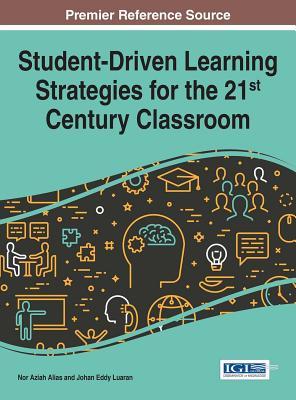
Student-driven learning strategies for the 21st century classroom provides a thorough examination of the benefits and challenges experienced in learner-driven educational settings and how to effectively engage students in these environments.
Modeling instruction is an interactive engagement (ie) teaching framework that makes use of many strategies to promote a student centered learning environment.
Jul 20, 2020 student-centered teaching strategies choice boards jigsaw/stations/centers inquiry-based learning project-based learning and problem-.
Student-centered learning: it starts with the teacher teachers encourage student-centered learning by allowing students to share in decisions, believing in their capacity to lead, and remembering how it feels to learn.
Feb 18, 2020 this type of teaching and learning is more natural than some might think. Implement the following four strategies to move your classroom from.
While the existing teaching methods depend on individual lessons and projects, focusing on one project enables students to put the knowledge together in the form of focused questions and assessments for the project or the problem. This method is called project based learning and it focuses on combining the knowledge in one large practical project.
Role-plays have been demonstrated as an effective learning strategy that includes an active and experiential feature that facilitates students' autonomy in their health-related learning. However, there is a lack of discussion of whether and how role-play can be used in problem-based learning (pbl).
Using a technology-rich environment, student-driven learning means lectures are complemented or replaced with active learning strategies and learning.
Sep 22, 2020 student-centered learning is here defined as curriculum and assignments that focus on a student's unique needs and goals.
Students tend to be more interested in learning when they can interact with one another and participate actively in their own education. Members of the class learn to work independently and to interact with others as part of the learning process.
In short, a student-centered classroom, or student-centered learning environment, is one where the focus of instruction is shifted from the teacher to the student, with the end goal of developing students who are autonomous and independent, by placing the responsibility of learning in the hands of the students.
Apr 15, 2020 student-student interaction discussion forums in a learning management system peer review activities for writing assignments and projects.
Self-driven learning: teaching strategies for student motivation [ferlazzo, larry] on amazon.
As the nellie mae education foundation describes, student-centered learning “engages students in their own success—and incorporates their interests and skills into the learning process. ” student learning is personalized, competency-based, happens anytime and/or anywhere, and students have ownership in their learning.
Put another way, student-centered teaching is teaching that is 'aware' of students and their needs above and beyond anything else.
Unlike computer-based assessment, adaptive curriculum requires real, live, in-the-moment interactions where knowledgeable teachers guide what and how children learn, based on what they know about their students and what students are ready to learn next.
Inclusive student-driven learning is the classroom environment students need to become life-long learners. John dewey said it best when he stated, “ give the pupils something to do, not something to learn; and the doing is of such a nature as to demand thinking; learning naturally results.
Student-centered teaching is teaching designed for the student. This means that planning often begins with the student in mind as opposed to a school policy or curriculum artifact, for example. Done well, it can disarm some of the more intimidating parts of academia, while also shortening the distance between the student and understanding.
What is a student-driven lesson? the purpose of a student-driven lesson is to give students practice using a strategy or strategies as they read a text at instructional level. ” i may provide a brief text introduction or support their reading through prompting.
One of the keys to developing a student-centered classroom and learning environment is to create ongoing projects for students.
Dec 24, 2013 here are five questions that can help us develop and refine the teacher strengths needed for creating a student-centered classroom.
Distance learning and hybrid education are different from in-person instruction. As districts nationwide have no doubt learned, distance learning is different—in good ways and in challenging ways—from the traditional in-person educational experience. In many ways, teachers and administrators have to be more intentional about their engagement strategies in order to provide the best.
Sep 9, 2015 teachers encourage student-centered learning by allowing students to share in decisions, believing in their capacity to lead, and remembering.
The term student-centered learning refers to a wide variety of educational programs, learning experiences, instructional approaches, and academic-support strategies that are intended to address the distinct learning needs, interests, aspirations, or cultural backgrounds of individual students and groups of students.
The concept of student-centered learning is truly revolutionary. It shifts the agency of learning from the teacher or the curriculum to the student.
Instructional strategies and methods are used to: manage time in flexible ways to match learner needs. Include learning activities that are personally relevant to learners. Give learners an increasing responsibility for the learning process.
Nov 27, 2019 given this growing evidence, it would be beneficial to incorporate these active learning strategies into the classroom.
Section v: a student-centric approach to student-centered learning students take increasing responsibility for their own learning, using strategies for self-.
Post Your Comments: