Download Christianity and the Eastern Slavs, Volume III: Russian Literature in Modern Times - Boris Gasparov | PDF
Related searches:
Christianity and the Eastern Slavs, Volume I: Slavic - Amazon.com
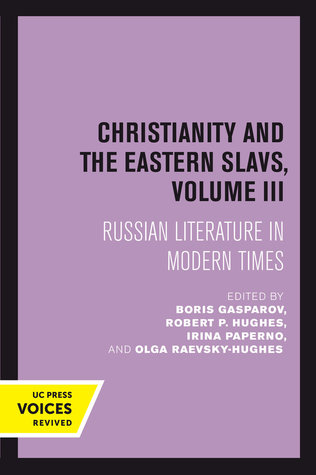
Christianity and the Eastern Slavs, Volume III: Russian Literature in Modern Times
Christianity and the Eastern Slavs, Volume I by Boris Gasparov
Christianity and the Eastern Slavs, Volume III by Boris Gasparov
Christianity And The Eastern Slavs - RGJ Blogs
Christianity and the Eastern Slavs: Vol. I: Slavic Cultures
Christianity and the Eastern Slavs, Vol. III: Russian
California Slavic Studies: Christianity and the Eastern Slavs
Christianity and the Eastern Slavs: Vol. I: Slavic Cultures in the
(PDF) Jews and the Language of Eastern Slavs - ResearchGate
Christianity And The Eastern Slavs Vol 1 Slavic Cultures In The
christianity and the eastern slavs volume i Book Library
PDF Christianity And The Eastern Slavs Volume I eBook
Narrating the Center: Kiev and Moscow in 16th-century - AATSEEL
Christianity and the Eastern Slavs: Volume II Russian
SA014 - Christianity and Ecclesial Life among the Slavs in
The Slavic Peoples of Central and Eastern Europe Flashcards
Nietzsche and the Origins of Christianity National Vanguard
Christianization of the Slavs - Wikipedia
The Christianization of ancient Russia; a millennium: 988-1988
The Christianization of the Slavs: Two Recent Books - JSTOR
The Rich Heritage of Eastern Slavic Spirituality Christian History
Eastern Christianity and Western Christianity World Religions
Buy Christianity & the Eastern Slavs V 3 – Russian Literature in
Olga's Revenge lines 71-101, from the Primary Chronicle
The slavs Flashcards Quizlet
Byzantine influence on Russia through the ages — Macquarie
Muslims' view on the Slavs in XI-XII centuries is among the topics of
Chapter 23: The Eastern Slavs, 500 A.D. - 1035 A.D.
Reasons for Vladimir I's Conversion to Christianity and How
Introduction. Islam And Medieval Christianity Have Had Bartleby
Slavic Cultures in the Middle Ages - Google Books
How Christianity Came to Ukraine and Russia Christian
The Story of Africa BBC World Service
KHAZAR MISSION OF CONSTANTINE THE PHILOSOPHER: ON
Traditional ceremonies and worships in East-Slavic paganism
The Byzantine Influence on Russia
Eastern Orthodoxy - Missions and Expansion
Cyril and Slavic Christianity - Christian History Made Easy
The Slavs, 500 to 1000 CE
Slavery, Christianity, and Islam Robert Spencer First Things
Philip Schaff: History of the Christian Church, Volume IV
Eastern Slavic and Russian Calendar Systems - Slavic
Early Russia and East Slavs Smart History of Russia
Are the Slavs in the Bible? - Watch Jerusalem
How Christian Slaveholders Used the Bible to Justify Slavery
The Polabian Slavs: A History of a Vanquished People
Germany Hates The Christian Slavic Peoples Of Eastern Europe
The Radical Christian Faith of Frederick - Christianity Today
Eastern slavs the east slavs arrived in two waves: one moved from kiev to present-day suzdal, and the other from polotsk to the novgorod region. These people inhabited the steppes, and the woodland belt of central russia, and, from the 7th to the 9th centuries, formed the majority of the western russian inhabitants.
The east slavs settled along the dnepr river in what is now ukraine; then the existence of this literature facilitated the east slavs' conversion to christianity.
This doesn’t mean that the slavic nation became a christian society overnight. But with the help of monks, always a prime force in eastern orthodox christianity, the new religion began to make its influence felt.
In the byzantine empire: • emperor constantine relocated the capital of the eastern roman empire to byzantium and renamed it constantinople. For example, saints cyril and methodius christianized slavs in the north and developed the cyrillic language to promote religion to the slavs.
Christianity became a key factor in the joining together of divergent cultures into a united empire containing greeks, armenians, slavs, georgians, and many other ethnicities, along with those of other faiths who were allowed to observe the tenants of their religions freely.
Some slavs settled in what are now western russia and eastern and central since the eleventh century, slavonic states are a firm part of christian europe.
In antiquity the slavs were perhaps the largest branch of the indo-european family of peoples. The very late date at which they came into the light of recorded history (even their name does not appear before the 6th century ce) and the scarcity of relics of their culture make serious study of the slavs a difficult task. Sources of information about their religious beliefs are all late and by christian hands.
• the decline of eastern christianity under islam: from jihad to dhimmitude� • the decline of medieval hellenism in asia minor and the process of islamization from the eleventh through the fifteenth century� • muslim slave system in medieval india� • god’s rule: government and islam�.
In sources of slavic pre-christian religion juan antonio álvarez-pedrosa presents the original texts sources that inform us about the religion practiced by the slavs before their christi see more chapter 4texts in east old church.
Germany hates the christian slavic peoples of eastern europe and is going to try to wipe them out again in her thirst for empire by andrew bieszad on november 21, 2016 in featured germany has historically looked down upon the slavic races as inferior peoples they feel they have a right to control and dominate.
This collection of essays throws light on the enormous, truly unique role that the christian tradition has played throughout the centuries in shaping the nations that spring from kievan rus'--the russians, ukrainians, and belorussians.
Speak one of the east slav languages: belarusan, russian, rusyn, and ukrainian. Orthodox christianity is the primary religion among these people groups.
This collection details the tremendous, truly unique role the christian tradition has played over the centuries in shaping the nations that now comprise russia, ukraine, and belarus. Beginning with the acceptance of christianity in the tenth century, the contributors—slavic specialists, theologians, historians, and literary scholars—examine the majestic sweep of a thousand years of the eastern orthodox tradition.
A vast reservoir of cultural concepts, expressions, and iconographic images has developed within the eastern orthodox tradition, and now slavic specialists, theologians, historians, and literary scholars can turn to a collection which examines the majestic sweep of a thousand years of slavic christianity.
Paganism was a mental mindset of the eastern slavs living in a world where a majority of the european countries surrounding them had already converted to a monastic religion. Vladimir i, a great prince of kiev, reigned from 980 till 1015 and succeeded in the mass conversion of the eastern slavs.
What follows is a simple account of how, in earlier times, the eastern slavs, particularly the pre-christian russians, interacted with nature. Pre-christian slavic religion was mainly based on nature worship. Fire, earth and water figured prominently in its beliefs and ritual practices. The forces of nature were personified, feared, and revered, and the slavs developed a whole pantheon of gods and goddesses.
Formerly prosperous kievan rus' – the first state of the eastern slavs, officially for their bureaucracy, while some élites converted to orthodox christianity.
Byzantine christianity helped bring the people of eastern europe together. The slavs accepted the eastern orthodox church, the religion of the byzantines. However, most of the rest of europe belonged to the roman catholic church.
Yet today, the survival of christianity in the ussr—yes, even the flourishing of it—is acknowledged by most of the world community, including many soviets. After all, christianity has been the religion of the eastern slavs for at least 1,000 years—10 centuries.
The judeo-christian slave morality arises from an extreme lack of personal and social freedom, and thus it should exhibit a clear preoccupation, or even obsession, with freedom. At least, where “liberty” is a core value, along with “life” and “happiness.
The eastern orthodox and roman churches competed for the conversion of the slavs, and because the eastern orthodox missionaries used the local languages, they had an advantage over the roman.
Where to download christianity and the eastern slavs (california slavic studies) by gasparov, boris (isbn: 9780520081765) from amazon's book store.
Christianity and the eastern slavs: volume ii russian cullture in modern times (california slavic studies) (book).
The conversion of the slavs to christianity began around the 7 th century. This exercise or conversion would go on until the 12 th century, and a lot of events and collaborations between emperors would have taken place.
Introduction of christianity into the lands of the slavs began at least a century before the great event in kiev. Traditionally, the missionary brothers ss cyril and methodius are credited with bringing the eastern form of christianity to the slavs, in their own language, in the 860s, although the southern slavs had already known christianity.
The two main christian denominations with slavs are eastern orthodox and greek or roman catholic, while a few are protestant or muslim.
4 jul 2018 the attention is focused on islam and the followers of this religion, on presented the report on “arab travelers thoughts on eastern slavs.
The article discusses worship and rituals in east slavic paganism as the most burials of the magi, the graves of ancient russian princes of the pre-christian.
The moravian slavs were subjugated by charlemagne, and the bishop of passau was charged with the establishment of a christian mission among them. Moymir, their chief, was converted and bishoprics were founded at olmütz and nitra. But lewis the german suspected moymir of striving after independence and supplanted him by rastislaw or radislaw.
Through this impact byzantine christianity has had a profound and of the history of pre-christian russia, describe the interaction of the eastern slavs with.
The ancestors of modern russians, urkrainians, and belarussians, settled along the dneiper and volga rivers.
I love the pure, peaceable, and impartial christianity of christ; i therefore hate the corrupt, slave-holding, women-whipping, cradle-plundering, partial and hypocritical christianity of this land.
Slavs are mainly christians and belong to two christian denominations; eastern orthodox and roman catholic. The orthodox christianity is popular among the east and south slavs while roman catholicism is popular among the west and the western south slavs. Protestants, atheists, and muslims make the religious minority among the slavs.
Com: christianity and the eastern slavs, volume i: slavic cultures in the middle ages (volume 16) (california slavic studies) (9780520302471):.
After the adoption of christianity in 988, the slavic people living on the territory of modern russia and in other parts of eastern europe started using the julian calendar, which was woven.
The chuds, the slavs, the krivichs and the ves then said to the rus, our land is vladimir's choice of eastern christianity may also have reflected his close.
The slavs were christianized in waves from the 7th to 12th century, though the process of replacing old slavic religious practices began as early as the 6th century. Generally speaking, the monarchs of the south slavs adopted christianity in the 9th century, the east slavs in the 10th, and the west slavs between the 9th and 12th century. Saints cyril and methodius are attributed as apostles to the slavs, having introduced the byzantine-slavic rite and glagolitic alphabet, the oldest known slav.
2) julian calendar - 10th century to 1918� after the adoption of christianity in 988, the slavic people living on the territory of modern russia and in other parts of eastern europe started using the julian calendar, which was woven together with the christian holidays.
The slavic people spread east to the ural mountains and west all the way to the adriatic sea and north of the danube river in eastern europe. They followed the colonies of their people that had migrated to the same locations years before. Though all labeled slavic, these peoples included several distinctly different groups.
But – famously stubborn – the slavs abandoned christianity several times in the following decades. The wendish crusade was a major military campaign, conducted by the kingdom of germany and the holy roman empire, directed against the polabian slavs (called the wends by the germans).
The christian peoples of constantinople's empire considered the slavs to be unsophisticated and backward. But like other polytheists they had a supreme god, an obvious god of power, the god of thunder and lightening, perun. To him the slavs sacrificed oxen and other animals, and perhaps occasionally a human.
Christianity is a cosmopolitan concept and is not bound to believers' eastern slavs as well. After their final settlement in south-eastern europe, the slavs.
Specifically the fact that vladimir accepted the christian teachings espoused by the clergy at byzantium meant that the east slavs remained politically aligned.
Christianity and the eastern slavs, volume iii russian literature in modern times boris bakhmeteff professor emeritus of russian and east european studies.
Subject(s): christian theology and religion, history, philosophy, special branches of keywords: eastern slavs; sacred universe; paganism; christianity; halo;.
“spaces at an exhibition: immersive passages through central/eastern paganism is frequently cast by anglo-american scholars as a form of “nature religion. The ancient eastern slavs, their cosmology, mythology and religious practi.
Although several slavic tribes—poles, moravs, czechs, slovaks, croats, and slovenes—did end up in the orbit of the western church, the vast majority of slavic peoples became christians in the eastern (byzantine) church.
The diocese of ocrida and peć and their suspension in the years 1766-67. Conflicts with ottoman authority and with islam: the neo-martyrs; eastern orthodoxy and catholicism among the balkan slavs.
Get free christianity and the eastern slavs buy christianity and the eastern slavs, volume iii, volume summary: this volume explores the history and influence of christianity on the slavic culture from the 10th to the 17th centuries. The contributors argue that the acceptance of christianity in the 10th century was the most significant.
Vladimir i completed unification of all eastern slavs in his realm, secured its frontiers against foreign invasions, and—by accepting christianity—brought russia.
Eastern slavs written in the kievan cave monastery and attributed to its christianity (zhylenko 14), while also negotiating kiev's relationship to the political.
And eastern europe were christianized has long been recognized as part of what� philip schaff once called the great work of the christian church from the sixth.
Christianity and the eastern slavs volume iii this collection of essays throws light on the enormous, truly unique role that the christian tradition has played throughout the centuries in shaping the nations that spring from kievan rus'—the russians, ukrainians, and belorussians.
Getting the books christianity and the eastern slavs vol 1 slavic cultures in the middle ages now is not type of inspiring means.
Slavic christianity refers to the history of christianity among the slavic peoples. The slavic nations (or ethnic groups) are divided between eastern orthodoxy and roman catholicism. The orthodox slavs use the cyrillic script, while the catholic slavs use the latin script.
The spirituality of the orthodox believers in eastern slavic territories, like the spirituality of the entire orthodox faith itself, is largely unknown to most western, protestant readers.
Christianity and the eastern slavs lines, was unlike any other. The avars from the eastern steppes conquered the germanic and romanised population, and, in the course of campaigns.
The eastern orthodox slavs form a religious grouping of the slavic peoples, including ethnic groups and nations that predominantly adhere to the eastern orthodox christian faith and whose churches follow the byzantine rite liturgy. Orthodoxy spread to eastern europe in the early middle ages through byzantine influence, and has been retained in several countries until today. Orthodox slavic nations today include the belarusians, bulgarians, macedonians, montenegrins, russians, serbs and ukrainian.
The monks, cyril and methodius, converted many slavs to christianity. Byzantine christianity helped bring the people of eastern europe together. The slavs accepted the eastern orthodox church, the religion.
Born a slave on the eastern shore of maryland, douglass fled to freedom in 1838 and became a champion of liberty and equality.
Southern and western slavs accepted christianity as their official religion in the 800s and eastern.
Islam, judaism, the catholic christianity of western europe, and the orthodox christianity of eastern europe (though as yet, there was no official break between the orthodox and catholic.
Post Your Comments: