Read online Honour and Violence: Gender, Power and Law in Southern Pakistan - Nafisa Shah | ePub
Related searches:
Honour And Violence: Gender, Power And - BERGHAHN BOOKS
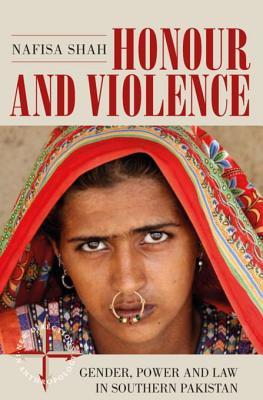
Honour and Violence: Gender, Power and Law in Southern Pakistan
Honour and Violence: Gender, Power and Law in Southern - JSTOR
Honour and Violence: Gender, Power and Law in - Amazon.com
Shah, Nafisa. 2016. Honour and violence: gender, power and law in
Shah, Nafisa: Honour and Violence. Gender, Power, and Law in
Honour and Violence: Gender, Power and Law in - Goodreads
Honour and Violence: Gender, Power and Law in - Google Books
Interrogating violence against women and state violence policy - DiVA
Gender and Masculine Honor Ideology: Why They Matter for Peace
Gender specific honor codes and cultural change - Stichting Kezban
Gender, ethnicity and risk: Young women and Honour Killings - CORE
Gender-based violence, power and norms - World Bank Blogs
Gender, power, and violence: A systematic review of measures
(PDF) Honour, violence and heteronormativity Nicole L
Introduction: ‘Honour’ and ‘Honour’-Based Violence
The book not only clarifies that honour-based violence can be understood as one of many forms of violence against women or of gender-based violence, it offers a logical framework within which gender-based violence in many cultures and contexts can be understood as honour-based violence.
Gender, power, and law in southern pakistan (issn0257-9774) von aus dem jahr 2018.
In many different regions in the world, and across different cultures, women become victims of “honor related violence” because their behavior deviates from.
Welchman and sara hossain, 'honour': crimes, paradigms and violence against� women (zed books 2005).
A trainer in gender, violence and sexuality and an activist in health and civil rights movements in india. Honour has been studied in the past few centuries by anthropologists, philosophers, writers and lawyers.
Honour and violence: gender, power and law in southern pakistan.
6 feb 2020 there are laws in indian penal code for the honour killings; but it is just an of power especially, violent and power as played throughout gender norms. The violence is built into the structure and shows as unequal.
“there is nothing ‘honourable’ about honour killings”: gender, violence and the limits of multiculturalism abstract ‘honour killings’ are extreme acts of domestic violence culminating in the murder of a woman by her family or community.
This is supported by empirical evidence, which shows hba, in common with other forms of gender-based violence, most often involves female victims and male.
Violence is shaped by and structures social positions and gender orders, and serves to maintain reconceptualized as a form of power, inequality and control. Genital mutilation (fgm), honour crimes, and to a lesser extent trafficki.
Gender-based violence stops girls from reaching their potential. And roles attributed to or expected of them according to their sex or gender identity marriage, intimate partner violence, female genital mutilation, 'honour'.
These expressions of heteronormative violence are produced in and through collective understandings of sexuality and gender irrespective of whether the violence unfolds as multiple-perpetrator domestic violence (salter 2014), intrafamilial hate crime against gay men and lesbians (asquith 2012a) or collective honour based violence.
Instead of focusing on the cultural context of crimes committed in the name of honour, it is vital to recognize that violence against women is found in all societies where there are unequal gender relations. However, it is possible to use the term honour killing while subsuming it under the umbrella of domestic violence.
Honour and violence: gender, power and law in southern pakistan (new directions in anthropology, 39) [shah, nafisa] on amazon.
In recent years, violence against women (vaw) committed in the name of ‘honour’ has attracted increasing attention across the globe. Unfortunately, media accounts and policy discourses concerning honour-based violence (hbv) and so-called honour killings have principally viewed the problem through the lens of cultural essentialism.
For men, violence is an appropriate response to affronts, and men who back down when challenged lose status.
Introduction: harmful gender norms, views on the acceptability of violence against women, and power inequities in relationships have been explored as key drivers of male perpetration of intimate partner violence (ipv). Yet such antecedents have been inconsistently measured in the empirical literature.
Violence, sexual violence, child marriage, female genital mutilation and so-called 'honour crimes'.
Gender violence is a violation of human rights and freedom from gender-based violence is a necessity. Women’s movements are often organised to make an attempt to reclaim their rights. There are different strategies that have been worked out to voice the problems that women face in the patriarchal setup.
Post Your Comments: