Download Decision Management: Concepts, Methodologies, Tools, and Applications - Information Resources Management Association file in ePub
Related searches:
Decision Management: Concepts, Methodologies, Tools, and
Decision Management: Concepts, Methodologies, Tools, and Applications
Decision Making - Meaning and Important Concepts
Management: Definitions, Concept, Objectives and Scope
Planning, Directing, And Controlling - principlesofaccounting.com
Decision Making Process: Concepts and Methods Wiley
Decision Management: Concepts. Models and Examples (3rd
Concept, Importance and Step of Decision Making Notes
Learn About Management Concepts and its Four Functions Right
New Concepts and Trends of Hybrid Multiple Criteria Decision Making
Decision Making: Meaning and Characteristics - MBA Knowledge
Strategic Management Concepts and Applications - M. Ray Grubbs
Total Quality Management Principles, Concept and Importance
Strategic Decision-Making: Concepts of Content and Process - JStor
Management Concepts and Applications/Management - Wikibooks
Management Accounting and Decision-Making
Concept of Cost and Managerial Decision Making
Decision Support Systems: Concepts and Resources for Managers
Introduction to Management and Leadership Concepts
Common Concepts and Techniques of Managerial Accounting
Decision-Making: Concept, Process and Techniques RajRAS
(PDF) Decision Support Systems: Concepts, Progress and Issues
CONCEPT, ROLE AND IMPORTANCE OF MIS
Management Science - Concept, Characteristics and Tools
These concepts can be readily applied to decisions about environmental issues but have not been used systematically in the contaminated sediments context,.
Data-driven decision making (dddm) is the practice of collecting data, analyzing it, and basing decisions on insights derived from the information. This process contrasts sharply with making decisions based on gut feeling, instinct, tradition, or theory.
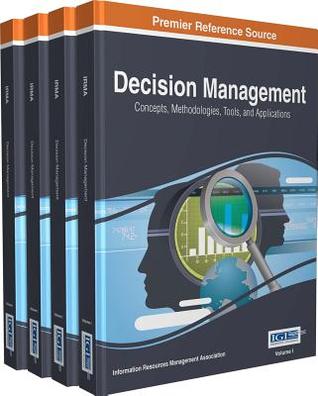
Decision management: concepts, methodologies, tools, and applications is a compendium of the latest academic material on the control, support, usage, and strategies for implementing efficient decision making systems across a variety of industries and fields. Featuring comprehensive coverage on numerous perspectives, such as data visualization, pattern analysis, and predictive analytics, this multi-volume book is an essential reference source for researchers, academics, professionals.
The five management functions of planning,organizing,con- trolling, directing, and staffing are brought to life and con- nected by decision making, which is itself a subset of the essential process for managers that is known as problem solv- introduction to management and leadership concepts, principles, and practices.
Decision-making is a pervasive function of managers aimed at achieving organizational goals. Decisions are to be taken in all managerial functions such as planning, organizing, motivating, directing and controlling and in all functional areas such as production, marketing, finance, personnel, and research and development.
Decision management: concepts, methodologies, tools, and applications information resources management association usa volume iii igil disseminator of knowledge.
“management is simply the process of decision-making and control over the action of human beings for the express purpose of attaining predetermined goals. ” stanley vance has emphasized decision-making and control over the actions of employees for reaching the enterprise goals.
Models and examples (3rd edition)(chinese edition) [song jin zhou] on amazon.
Managerial decision makingbr /decision making:the process by which managers respond to opportunities and threats by analyzing options, and making decisions about goals and courses of action. Br /decisions in response to opportunities:managers respond to ways to improve organizational performance. Br /decisions in response to threats:occurs when managers are impacted by adverse events to the organization.
Every decision consists of several primary elements – management objectives, decision options, and predictions of decision outcomes. By analyzing each component separately and thoughtfully within a comprehensive decision framework, it is possible to improve the quality of decision-making.
Decision making is the mental process of choosing from a set of alternatives. Every decision-making process produces an outcome that might be an action, a recommendation, or an opinion. Since doing nothing or remaining neutral is usually among the set of options one chooses from, selecting that course is also making a decision.
Jul 24, 2018 managers see the possibility of enhancing performance beyond current levels.
In the new business management micromasters program from iimbx and edx, entrepreneurs, students and professionals can gain in-depth knowledge of the key concepts of management across six functional areas. Get an overview of accounting, finance, operations, human resources management, marketing and strategy.
Multiple criteria decision making (mcdm) has been researched for decades. Now as the rising trend of big-data analytics in supporting decision making, mcdm.
Do you see participative management concepts present at your place of work within decision making processes? if so, please provide some specific.
2 quotes from strategic management: concepts and cases: 'although some which is based upon integrating intuition and analysis in decision making.
The manager is trying to figure out a way to solve a problem. Part of the definition of decision-making is solving problems. The manager is giving an employee praise for a job well done.
Decision management, business decision management as we call it here at the bpminstitute. Org, is both an approach and a technology stack for automating and improving business decisions. The approach is about focusing on the high volume, operational decisions that must be made every day in your organization: the decisions in your operational processes, the decisions your call center representatives and other front line staff make.
While evidence-based decision-making involves data and information collation and analysis, mutually beneficial supplier relationships promote strong relationships between the organization and its suppliers. Also, the concept of total quality management focuses on continuous improvements by an organization to meet and exceed customers expectations.
A decision is an act of choice wherein a manager forms a conclusion about what must be done under a given situation. A decision represents a course of behaviour chosen from a number of possible alternatives. Decision making involves two or more alternatives because if there is only one alternative, there is no decision to be made.
Scholars from a variety of disciplines have studied the process of decision-making for decades: psychology, political.
The importance of decision-making in management lies in management's power to impact people positively or negatively. The more you practice decision making skills that aim to reduce risk and increase benefit, the greater of a positive impac.
The art of decision-making when making a decision, we form opinions and choose actions via mental processes which are influenced by biases, reason, emotions, and memories.
One of the most important tasks of management is to allocate these resources effectively and efficiently to achieve the company’s goals and objectives.
Total quality management as part of the operations management process is important in conjunction with the other three concepts. 544) defines the process as ‘a management system that is an integral part of an organisation’s strategy and is aimed at continually improving product and service quality so as to achieve.
Above all, effective executives know that decision making has its own the administration's refusal to develop rules and principles, and its insistence on training.
Managerial accounting functions - decision making chart core values can cover a broad spectrum involving concepts of fair play, human dignity, ethics,.
Decision-making is a cognitive process that results in the selection of a course of action among several alternative scenarios. When it comes to business organizations, decision-making is a habit and a process as well.
Decision making is an act of choice, wherein a manager selects a particular home management concepts decision making: meaning and characteristics.
The concept of functions of management was put forth by henri fayol, a management theorist from france, influential in proposing many of the management concepts in use today. Originally, he had proposed five management functions; namely, planning, organizing, commanding, coordinating and controlling.
View test prep - management concepts quiz 1 from bus 302 at strayer question 1 5 out of 5 points there are how many styles of decision-making? selected.
They try to make the few important decisions on the highest level of conceptual understanding.
I recently read an hbr article that reinforced much of what we’ve been seeing internally at management concepts for the last two years: analytics is a function, not a job title, and regardless of job title, analytics should be a part of every team’s profile.
Making decisions has been identified as one of the primary responsibilities of any manager. Decisions may involve allocating resources, appointing people, investing capital or introducing new products.
The concept of decision making decision making is an important function in management. One of the most important tasks of management is to allocate these resources effectively and efficiently to achieve the company’s goals and objectives.
At the core of any decision model, and of the dmn standard, are a few key concepts: the most effective way to define a decision is to specify the question that must.
Administrators solving the problems of practice: decision-making concepts, cases, and consequences, 3rd edition.
Study concepts through which a modern organization can be viewed as a and general principles of management including: decision-making, planning,.
This concept suggests that the managers may not always be perfectly rational in making decisions. Their decision-making ability may be limited by certain factors.
A decision can be defined as a course of action purposely chosen from a set of alternatives to achieve organizational or managerial objectives or goals. Decision making process is continuous and indispensable component of managing any organization or business activities.
It is the potential ability of a person or group to influence another person or group. It is the ability to get things done the way one wants them to be done. Both formal and informal groups and individuals may have power; it does not need an official position or the backing of an institution to have power.
Decision making is choosing among alternative courses of action, including inaction. There are different types of decisions, ranging from automatic, programmed decisions to more intensive nonprogrammed decisions. Structured decision-making processes include rational decision making, bounded rationality, intuitive, and creative decision making.
Making good ethical decisions requires a trained sensitivity to ethical issues and a practiced method for exploring the ethical aspects of a decision and weighing the considerations that should impact our choice of a course of action. Having a method for ethical decision making is absolutely essential.
Concept #3: redefine management as a service position when managers are seen as being in service, decision-making more naturally moves down to the lowest appropriate level of the company.
An introductory course in the study of business management and the various managerial skills necessary to make the decision-making process work.
A business owner and his management team require timely and accurate reports in order to make decisions and run the company.
Managerial accounting defined� managerial accounting is the process of identifying and analyzing financial information so that management personnel can make better-informed business decisions.
In the decision making process, we choose one course of action from a few possible alternatives. In the process of decision making, we may use many tools, techniques and perceptions. In addition, we may make our own private decisions or may prefer a collective decision.
Even though managers recognize their responsibility to make good decisions, participate in group decisions and influence deliberations that lead to other decisions, they seldom understand the underlying decision-making process or think about their role as decision managers.
Concepts and terms decision management functionality is delivered through the combination of decision management rules sets and the decision management service layer for adaptive decisioning and business monitoring.
Every organization needs to make decisions at one point or other as part of managerial process. For that matter, decisions made by the organization are to lighten the way forward.
The following points highlight the twelve main concepts for managerial decision making.
How do you make your toughest decisions? write a pro/con list? go with your gut? have your own system that you’ve perfected over the years? how do you make your toughest decisions? write a pro/con list? go with your gut? have your own syste.
It draws on everything you have studied and learned and integrates with the study of strategic decision-making (policy).
A project is an undertaking by one or more people to develop and create a service, product or goal. Project management is the process of overseeing, organizing and guiding an entire project from start to finish.
Management concepts and applications/management it is also described as the technique of leadership, decision making and a mean of co-ordinating.
Post Your Comments: