Download Gender and the Koseki in Contemporary Japan: Surname, Power, and Privilege - Linda White file in ePub
Related searches:
Gender and the Koseki In Contemporary Japan - Routledge
Gender and the Koseki in Contemporary Japan: Surname, Power, and Privilege
Gender and the Koseki In Contemporary Japan - Amazon.com
Gender and the Koseki in Contemporary Japan - ResearchGate
The Routledge Companion to Gender and Japanese Culture
Gender and the Koseki in Contemporary Japan : Surname, Power
Gender and the koseki - UQ eSpace
Gender and the Koseki In Contemporary Japan: Surname, Power
Gender and the Koseki in Contemporary Japan Taylor
Gender and the Koseki In Contemporary Japan (Routledge
Gender and the koseki in contemporary Japan : surname, power
(PDF) Gender and the Koseki
Routledge Contemporary Japan Ser.: Gender and the Koseki in
Gender and the Koseki The Routledge Companion to Gender and
Gender Stratification and the Family System (Chapter 6) - An
Japan's Archaic Civil Code and the Plight of the Unregistered
In Search of the Japanese Family: Modernity, Social Change, and
The Routledge Companion to Gender and Japanese Culture - 1st
Geographies of Self and Other: Mapping Japan through the Koseki−−
The Family, Koseki, and the Individual: Japanese and Korean
Sex and Gender Identity A guide through the history of
The Link Between Beauty And The Gender Gap
Science, society and the sea of fertility: new reproductive
Sexuality and Gender - The New Atlantis
Monthly Review Marx on Gender and the Family: A Summary
Education In Contemporary Japan: Inequality And Diversity - UNEP
Gender, Family and Fertility: Why are Japanese Women - CORE
Redalyc.Japanese women's role. Past and present
Intersections Review, Beyond Common Sense: Sexuality and
Review - Women and Politics in Contemporary Japan
Illegitimacy and male privilege Taylor & Francis Group
(PDF) The Koseki - ResearchGate
Japanese Culture and Family Life in Japan
Jus Koseki: Household registration and Japanese citizenship
(DOC) The Koseki (2014) David Chapman - Academia.edu
How to: Koseki Records and Japanese Genealogy Research
Gender Roles in the Art of Dance
Japan’s Household Registration System and Citizenship: Koseki
Japan : Sex and gender : LGBTQ National Library of Australia
Koseki - Infogalactic: the planetary knowledge core
Gender Equality and Women's Empowerment Egypt U.S. Agency
Japan's Household Registration System and Citizenship: Koseki
The New Woman Fiction - Victorian Web
Beyond Common Sense: - Intersections: Gender and Sexuality in
The application of criminological theory to a Japanese
Family Registries: The Family Section
The koseki (family registration) system is the cornerstone of the scheme, representing the usually veiled ura aspect of japanese family structure. The basic unit of koseki is not an individual, but a household. The records of each individual’s gender, birthplace, date of birth, parents’ names, position among siblings, marriage, and divorce are kept in detail in each household koseki and filed in the local municipal office.
A koseki (戸籍) or family register is a japanese family registry. Japanese law requires all the modern koseki, encompassing all of japan's citizenry, appeared in 1872, persons diagnosed with gid must seek an official diagnosis.
In constitutional law, japan is a paradise of gender equality, except that some aspects of japanese civil law still reflect the old ie system. For example, in japan, everyone is registered in a koseki, a household register.
The modern patriarchy tends to naturalize concepts like binary gender relations as if they were timeless and unchangeable. R oughly 2,500 years ago, with the beginning of the regional development period, there was a remarkable shift in the figurines.
All legally significant transitions in a person’s life — births, deaths, marriages, divorces, adoptions, even changes of gender — are supposed to be registered in a koseki; in fact.
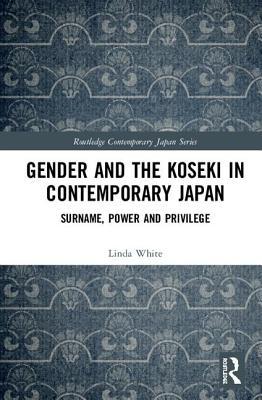
Gender and the koseki in contemporary japan, surname, power, and privilege.
姓), same-sex partnerships, legal gender change, and the intertwinement of family and citizenship – whether legal, colonial, or sexual. The book also offers an historical perspective on the development of the koseki system (and the changing household unit it shapes) and the outcaste registers of the early modern period,.
Family, inequality, and the work-family balance in contemporary japan. Rural gender construction and decline: negotiating risks through nostalgia.
Gender and the koseki in contemporary japan (routledge contemporary japan series) [white, linda] on amazon. Gender and the koseki in contemporary japan (routledge contemporary japan series).
Gender and the koseki in contemporary japan: surname, power, and privilege ( routledge contemporary japan series) 1st edition kindle.
The routledge companion to gender and japanese culture features both new work and updated accounts of classic scholarship, providing a go-to reference work for contemporary scholarship on gender in japanese culture. The volume is interdisciplinary in scope, with chapters drawing from a range of perspectives, fields, and disciplines, including.
The last part of the book focuses on current issues that are symptomatic of the inability of the koseki system to adapt to contemporary social evolution, such as the change of one’s sex/gender, the legal recognition of same-sex couples, and the equal treatment of unmarried couples and their children.
Gender, nation and state in modern japan, edited by andrea germer, vera� the right to have rights: the changing family and the unchanging koseki.
In this chapter introduction a brief history contemporary japan and the koseki fūfubessei: married couple, separate family names birth registration same-sex.
The men's movement is a social movement that emerged in the 1960s and 1970s, primarily in western countries, which consists of groups and organizations of men and their allies who focus on gender issues and whose activities range from self-help and support to lobbying and activism.
A koseki (戸籍) or family register is a japanese family registry. Japanese law requires all japanese households (known as ie) to report births, acknowledgements of paternity, adoptions, disruptions of adoptions, deaths, marriages and divorces of japanese citizens to their local authority, which compiles such records encompassing all japanese citizens within their jurisdiction.
10 nov 2020 download citation gender and the koseki in contemporary japan: surname, power, and privilege the japanese koseki system is the legal.
Even though marx did not write a great deal on gender, and did not develop a systematic theory of gender and the family, it was, for him, an essential category for understanding the division of labor, production, and society in general. Marx’s discussion of gender and the family extended far beyond merely including women as factory workers.
Responsibilitiesgender and the koseki in contemporary japancurrent publications.
The modern koseki, encompassing all of japan's citizenry, appeared in 1872, immediately following the meiji restoration. This was the first time in history that all japanese people were required to have family names as well as given names.
The unequal status of men and women as parents can be seen in the civil code rules that give men the right to acknowledge or refuse to acknowledge children born to their non-marital sex partners. The koseki’s function as an arbiter of lineage and legitimacy becomes clear through a number of case studies and historical analyses.
Gender and the koseki in contemporary japan� surname, power, and privilege the matter of names and why names matter separate-surname activism common-law marriage as a form of koseki resistance illegitimacy and male privilege: the underlying logic of the koseki beyond the scope of the koseki:.
In contemporary dance, the gender roles aren’t always male and female. Contemporary was meant to break away from dance commonalities, and so we see that the roles of males and females change.
The japanese koseki system is the legal and social structure keeping record of all japanese citizens. Determined by the civil code and the koseki law, for activ gender and the koseki in contemporary japan: surname, power, and privi.
83-91) edited by jennifer coates, lucy fraser and mark pendleton.
18 mar 2008 sexuality and gender in contemporary japan london political views and women with feminist interests are opposed to the koseki system.
The last part of the book focuses on current issues that are symptomatic of the inability of the koseki system to adapt to contemporary social evolution, such as the change of one’s sex/gender, the legal recognition of same-sex couples, and the equal treatment of unmarried couples and their children. Ninomiya describes the absurdity of the process required to legally change one’s registered genders.
This is a sample layout which represents how a wife and children are noted within a koseki. These pages generally follow the koseki page in which the main family representative is noted (see either of the koseki sample pages appearing before this page).
Legal sex, the classification of a person as either male or female, in japan is mediated through familial relationships documented on the family register (koseki).
In doing so, it develops our understanding of contemporary japan within the historical context of population management and social control; reveals the social effects and influence of the koseki system throughout its history; and presents new insights into citizenship, nationality and identity.
Gender and the koseki in contemporary japan: surname, power, and privilege linda white the japanese koseki system is the legal and social structure keeping record of all japanese citizens.
The creation of the jinshin koseki through the household registration law (koseki hō) (introduced in 1871 and implemented in 1872) played a critical role in the formation of a modern state by identifying and documenting the japanese population in preparation for a unifying national identity that would later become a nationality register.
Opinions of contemporary japanese women (see shirawakase, 2005). I have very common for japanese companies to consult the koseki of prospective.
He problematizes the koseki system’s registration by the unit of the ‘family’ as opposed to the individual through the example of the legal gender change of gid individuals, which highlights the general phenomenon of ‘koseki feelings’ that arises from shared registration and koseki’s fundamental infringements on the right to privacy.
Women can also have their own koseki in the case where a husband is “adopted” by the family.
In search of the japanese family: modernity, social change, and women's lives in contemporary japan.
Gender and the koseki in contemporary japan� surname, power, and privilege (routledge contemporary japan).
Gender and the koseki in contemporary japan by linda white (2018, hardcover) the lowest-priced brand-new, unused, unopened, undamaged item in its original packaging (where packaging is applicable).
In contemporary japan the koseki penetrates the lives of all japanese and many non-japanese residents and is perpetually challenged by a constantly shifting and diverse society to create complex.
Determined by the civil code and the koseki law, for activists challenging it, the koseki is also an ideological structure, which has produced patriarchal control through single-surname households. Based on ethnographic fieldwork in tokyo, this book engages with issues of gender hierarchy and structural inequality in japanese society.
Contemporary with the new socialism, the new imperialism, the new fiction and the new journalism, she was part of cultural novelties which manifested itself in the 1880s and 1890s. [1] at the end of the nineteenth century, new woman ideology began to play a significant part in complex social changes that led to the redefining gender roles.
The family, koseki, and the individual: japanese and korean experiences. Miyamoto yuki, ninomiya shuhei and shin ki-young offer historical and comparative perspectives on japan’s household registration system (koseki) and the rights of individuals. Text by miyamoto yuki translated by adam lebowitz with chikako kobayashi.
This, combined with a patriarchal, moralistic, and heteronormative approach to defining the legal family, means notions of gender/sex are moulded within the family registration system (koseki seido). There is much to gain in researching the koseki for scholars of gender in japan and gender studies in general.
The idea of studying japanese women and their decisive role in the pension systems based on the household unit (family registration koseki), b) a japanese.
8 sep 2016 male-dominated politics is one of the factors which has been causing gender inequality in japan, and the political under-representation of women.
I will place these texts in their social and cultural context with reference to medical, legal and popular discourses on new reproductive technologies in contemporary japan. These new reproductive technologies have the potential to force a rethinking of masculinity, femininity, parenthood, family and gender relations.
New research indicates that the pressure for women to spend considerable money, time and effort on attaining beauty is motivated by sexism and a desire to stall women’s progress in obtaining.
In 2003, the gid law was enacted, enabling people with gender identity disorder (gid) to change their gender on their koseki provided they meet certain conditions. Persons diagnosed with gid must seek an official diagnosis with letters of support from two independent psychiatrists in order to change their koseki gender.
In general, though, residents of the empire's colonies held external registries (gaichi koseki) (based on the preexisting hoju) and japanese held domestic registries (naichi koseki). [3] in 2003, the gid law was enacted, enabling people with gender identity disorder (gid) of gender dysphoria to change their gender on their koseki provided they meet certain conditions.
Pion of modern science, sought not only to highlight the potential of technology to improve human life, but also to foresee some of the social, moral, and political difficulties that confront a society shaped by the great scientific enterprise. His book offers no obvious answers; perhaps it seduces more than it warns.
Gender and the koseki in contemporary japan: surname, power, and privilege.
A koseki shohon gives information for only one family member, including their parents, birthdate, place of birth, and gender. A less common type is a koseki joseki tohon� which has information removed from the main registry due to death or divorce and is used only for inheritance and tax cases.
1 jan 2020 legal sex, the classification of a person as either male or female, in japan is mediated through familial relationships documented on the family.
Post Your Comments: