Read Tales of the Iron Bloomery: Ironmaking in Southeastern Norway - Foundation of Statehood C. Ad 700-1300 - Bernt Rundberget | ePub
Related searches:
Tales of the Iron Bloomery – Ironmaking in Southeastern Norway
Tales of the Iron Bloomery: Ironmaking in Southeastern Norway - Foundation of Statehood C. Ad 700-1300
Tales of the Iron Bloomery - Brill
Tales of the iron bloomery : ironmaking in southeastern Norway
The Iron Story - the High Weald
Bloomery Article about Bloomery by The Free Dictionary
Bloomery - definition of bloomery by The Free Dictionary
By Who, for Whom? Landscape, Process and Economy in the
The Carp River Bloomery Iron Forge - Industrial Archaeology
Immanence, configuration and the bloomery ironmaking process
Making Iron The Old-Fashioned Way Is A Tricky Business
Explaining the evolution of ironmaking recipes – An example
(PDF) Explaining the evolution of ironmaking recipes – An
The Delmarva Bog Iron Industry - Binghamton University
Worldbuilding with the Medieval Industrial Revolution - SFWA
Iron in my mind – The New Generalist
The Scowles and Associated Iron Industry Survey - Gloucestershire
The Albemarle Iron Works - W&M ScholarWorks - William & Mary
The Iron Age in Meroe ~ (School SS Project) TKP KidPub Press
(PDF) The metallurgy of the American bloomery process
The Industrial Archaeology Study of Vermont: 1978-1993
SELECTED BIBLIOGRAPHY - The Rockbridge Bloomery
The Bloomary Process + pics - Pyrites
REGIONAL VARIATIONS IN BLOOMERY SMELTING SLAG OF THE IRON AGE
The Iron Industry of the Weald - Henry Cleere, David W
Iron---The Material of the Industrial Age - Bob Brooke
Iron Smelting In Sudan: Experimental Archaeology At The Royal
Historical Metallurgy Vol. 48 (1 & 2) – The Historical
Making Iron In The Woods - Bloomery Furnace - video Dailymotion
The evidence and the secrets of ancient bloomery ironmaking
Meroe’s iron producers made use of the direct, or bloomery, smelting technology. Unlike the blast furnace technologies of today, bloomery ironmaking involves the reduction of iron oxides to particles of iron metal in the solid state.
Small, workable iron veins were discovered in many areas in the state, and small furnaces were set up at these spots for smelting the ore and manufacturing bar iron for the pioneer blacksmiths. In west virginia, iron production began in 1760 at the bloomery, near harpers ferry, on the lower shenandoah river.
In the course of the rundberget b 2016, tales of the iron bloomery.
8 jan 2018 landscape, process and economy in the bloomery iron production ad 400-1000� keywords: bloomery iron production; scandinavian iron age; tales of the iron bloomery.
81 iron smelting in the nigerian early iron age site at taruga, abuja emirate. Tylecote 83 the phosphorus content of iron from the bloomery site at west runton, norfolk. Marshall 6 technical aspects of the early iron industry of furness and district.
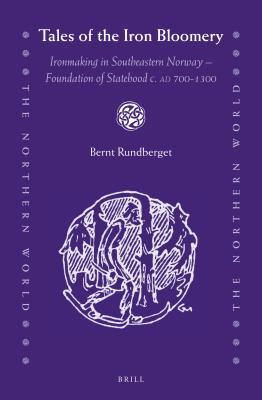
In tales of the iron bloomery bernt rundberget examines the ironmaking in southern hedmark in norway in the period ad 700-1300. Excavations show that this method is distinctive and geographically limited; this is expressed by the technology, organization, development and large-scale production.
The geology of wealden iron bernard worssam� 1: the bloomery process� 40: prehistoric ironmaking in the weald accounts appears ashburnham bank base beds blast.
Abstract the technology of bloomery iron production in latvia is a little-studied topic. Only a few excavations have been undertaken, mostly during the 1950s and 60s in connection with hydropower development along the river daugava.
The organization of the iron bloomery and the exploitation of resources.
From the late iron age until the end of the middle ages, iron was smelted in the weald in bloomery furnaces.
A bloomery is a type of furnace once widely used for smelting iron from its oxides.
Bloomery, or direct process ironmaking, involves the solid state reduction of iron oxide to metal and was the predominant means of producing iron in the pre-industrial world.
The iron block contained various amounts of slag and therefore it had to be heated and hammered thoroughly to get the slag squeezed out from the block. The block was cut into smaller pieces and forged to tools and weapons or commercial blooms.
A bloomery is a type of furnace once used widely for smelting iron from its oxides. The bloomery was the earliest form of smelter capable of smelting iron.
The direct process involved the smelting of roasted ore in a crude clay or stone furnace (bloomery) and the forging of the resulting spongy mass into a bloom of wrought-iron. This process was introduced into britain circa 500 bc (thus the early iron age) and during the early part of the roman occupation the weald was the chief area of production.
The iron industry of hampshire county during the early- to mid-19th century provided a viable livelihood for those investing their lives in the rural industries of the river valleys of western virginia. Extant records of bloomery furnace form the basis for this brief history.
Iron from bloomery furnaces were used in japan, renaissance europe,ancient rome, africa, and many other places to make iron and steel forarmor, swords, locks, tools and hundreds of other household.
Between stage, call it an ingot, currency or iron bar has its own story to tell. Bloomery iron making were used during the iron age (cross from left to right).
The technology of bloomery iron production in latvia is a little-studied topic. Only a few excavations have been undertaken, mostly during the 1950s and 60s in connection with hydropower development along the river daugava.
\rthe website for the wealden iron research group is \ran application to join the wealden iron research group can be found on their website.
Radomír pleiner in iron in archaeology: the european bloomery smelters (2000: 20–21) identified tales of the iron bloomery: ironmaking in southeastern.
Of bloomery slags from the rich finds from about year 200 bc to 1800ad in mid-.
“ a monument to misguided enterprise”: the carp river bloomery iron forge.
The bloomery is a functional block that can be used in the advanced stages of the game for smelting glass and metals like iron that require temperatures that.
(such as examination of smelting and smithing slags formed in bloomery iron-making process.
A bloomery used by a village typically produces about 2 lbs of iron, but bloomeries can be made larger to produce more. Furnaces used by towns are large enough to produce about 30 lbs on average, whereas industrial-sized furnaces called catalan forges can produce as much as 650 lbs of iron.
Finds of bloomery sites in the counties of south and north trondelagin norway have indicated large-scale ironmaking, starting in the pre-roman iron age and lasting imtil the merovingian period.
When the romans invaded in ad 43, they found a well- established local tradition of iron making, using small, clay bloomery furnaces.
In hisarna ironmaking process, iron ore is processed almost directly into liquid iron or hot metal. The process is based around a type of blast furnace called a cyclone converter furnace, which makes it possible to skip the process of manufacturing pig iron pellets that is necessary for the basic oxygen steelmaking process.
A bloomery is a type of furnace once used widely for smelting iron from its oxides. The bloomery was the earliest form of smelter capable of smelting iron. Bloomeries produce a porous mass of iron and slag called a bloom. The mix of slag and iron in the bloom, termed sponge iron, is usually consolidated and further forged into wrought iron.
While the 1731 discovery of iron ore suggested the potential for an industry, processing the ore into iron required money and iron-making technology. In 1732 entrepreneur thomas lamb arrived from massachusetts and began purchasing property and water rights for power.
Immanence, configuration and the bloomery ironmaking process: identifying behavioural opportunities from physical constraints. Presented at the 80th annual meeting of the society for american archaeology, san francisco, california.
Geology during the early middle ages, the iron production in sweden depended on the bloomery furnace, which up to that point was well established as the only way to produce iron.
Ufacturin giron, either workin ore into wrou ht iron at small bloomery forges, or smelting ore into cast iron in tall blast furnaces. These early forges dotted banks of swift-running stream sand rivers, an w ring the need of verm nt settlers. Associated with ironmaking was the need f or ch arc l to fuel the forges and furnaces.
Because the companies' land-holdings were tied up in partnerships and could not be sold, the region's economic growth was virtually frozen. After the companies' holdings were finally broken up, a new iron industry developed.
Wrought iron, the type of iron produced in small quantities in a clay furnace called a ‘bloomery’ is a pure form of iron and has a fibrous structure. Wrought iron though pure can however contain small amounts of impurities ie slag from the smelting process.
Editor’s note: the first installment in this series reviewed early ironmaking techniques in colonial virginia and described the author’s careful reconstruction of a period-style bloomery at colonial williamsburg.
22 feb 2018 home story contact of early iron making in sweden (sweden has a long history of iron smelting, the old bloomeries didn't get hot enough to melt iron, but they still managed to produce quality.
Ironmaking by the bloomery process at nornas, sweden, in 1851. Journal of the historic metallurgy society 25:1 (1991): 21-36.
Chapter 2: a short history of iron making assistance in the areas of bloomery and blast furnace operations, but, outside of sagas and fairy tales, where.
Liquid iron collects at the bottom of the blast furnace, underneath a layer of slag. The blacksmith periodically lets the liquid iron flow out and cool. At this point, the liquid iron typically flows through a channel and into a bed of sand.
Bloomery, or direct revision received 5 may 2010 process ironmaking, involves the solid state reduction of iron oxide to metal and was the predominant available online 8 june 2010 means of producing iron in the pre-industrial world.
A bloomery was a cheaper, simpler way to produce iron than by using a blast furnace. Like contemporary blast furnaces, the bloomery used charcoal for fuel, but unlike the blast furnace the iron ore never reached a temperature high enough for it to melt. In the bloomery operation, charcoal and iron ore were ignited and air applied.
Steelmaking is the process of producing steel from iron ore and/or scrap. In steelmaking, impurities such as nitrogen, silicon, phosphorus, sulfur and excess carbon (most important impurity) are removed from the sourced iron, and alloying elements such as manganese, nickel, chromium, carbon and vanadium are added to produce different grades of steel.
Bloomery, or direct process ironmaking, involves the solid state reduction of iron oxide to metal and was the predominant means of producing iron in the pre-industrial world. The most archaeologically accessible record of bloomery practice is slag, an essential by-product of the smelting process.
Newlin grist mill has had mixed success with its bloomery operation since beginning to to see images of the iron-making process, watch the slide show.
In tales of the iron bloomery, bernt rundberget examines the ironmaking in southern hedmark in norway in the period ad 700-1300.
Bloomery ironmaking in latvia – a comparative study of iron age and medieval technologies b rundberget, a vasks, i m gundersen, r brūzis, j h larsen, v bebre, i doniņa and a vīksna abstract the technology of bloomery iron production in latvia is a little-studied topic.
In the center of this exhibit is a chimney type structure known as a bloomery. Using a bloomery like this (it would be a lot bigger), iron-workers of meroe would smelt the iron, which created the tools and weapons you see as well. Like most of these tools, the iron arrow head lead to even greater things.
Post Your Comments: